

In the Europe we live in today, electricity has become an indispensable part of our lives. Beyond economic fluctuations, access to it is truly easy nowadays, especially when compared to other parts of the world where it hasn't yet arrived and may take a long time to do so. As a result, when we attempt to recreate historical scenes, we often err in the amount of light present, either over-illuminating or darkening spaces.
The significance of this topic goes beyond satisfying mere curiosity or mentally accessing a more accurate image of the past. The ultimate goal is to have a better understanding of this paradigm that inevitably leads to significant social impacts. An example of this can be seen in sleep patterns. While it was once believed that people went to bed shortly after dark and slept until morning, as most do today, researcher Ekirch (2006) has found evidence suggesting that sleep patterns were different in the past. Prior to the Industrial Revolution, habitual sleep was biphasic, with a period of wakefulness between 11:00 PM and 1:00 AM when activity returned to rooms thanks to the light provided by lamps of the time.
It is due to this widespread misinformation that we will delve into this article on artificial lighting, tracing a chronological journey from prehistory to the present day, analyzing forms of illumination, types of lamps, and materials used for combustion.
In this first part, we must review the earliest archaeological references, dating back to prehistoric times, where torches and hearths are situated as well as certain primitive oil or fat lamps.
An important point before delving deeper is to distinguish between the presence of fire and documentation of its control in archaeological sites. Finding evidence of fire at a prehistoric site does not confirm that hominids knew how to produce it consciously. Its presence could be due to natural phenomena, such as lightning, rather than deliberate human action through various tools. This is why dates for the first controlled fires are so difficult to pinpoint accurately. A well-documented example where both torches and hearths were present is the French cave of Bruniquel, associated with Neanderthals and dated around 176,000 B.P. The remains related to lighting are divided into three categories: torches, hearths, and portable fat lamps (Medina-Alcaide et al., 2021, p. 3). Torches, mainly made of charcoal, were scattered throughout the network of galleries in deep areas where artificial light was essential.
Another well-documented example of fire remains in hearths is found at the Kebara cave on Mount Carmel in Israel, where there is solid evidence of Neanderthal use of fire during the Middle Paleolithic period between 60,000 B.P. and at least until 44,000 B.P. (Albert et al., 2012, p. 279; Chazan, 2017, p. 355).
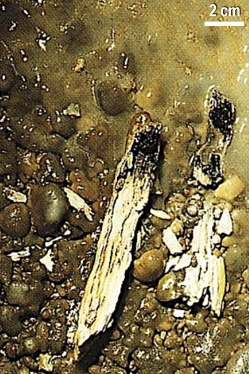
Moving on to the Epipaleolithic period (8000 B.P. to 6000 B.P.), we find remnants of torches in the Reseau Clastres cave (Ariège, France). These findings (Figure 1) are apparently associated with the presence of Paleolithic rock paintings in the same room. Generally, torch remains found are scattered along paths taken by these societies, not appearing as large pieces or complete torches but rather fragments.
Regarding hearths, their location is also quite deep within the cavities, with the difference of having much more concentrated carbonized residues. Inside these hearths are often found charcoal remains, calcined bones, ashes, and soot. In this regard, we can highlight examples found in the Nerja Cave (Andalusia, Spain), where traces of fire are located in natural or created concavities on speleothems (Figure 2).

But torches and hearths are not the only things found. Portable fat lamps have already been documented in prehistoric caves. In this case, the fuel can vary between vegetable oils or fats from different animals. Regarding the types, main studies divide them into three: open circuit lamps, closed circuit lamps, and closed circuit lamps with a carved handle (Figure 3). The first consist of unworked rock pieces where, when lit, the melted fat slides through natural cracks in the stone. Closed circuit lamps on the other hand aim to retain this fat without it sliding away. Those that come with a carved handle seek better portability and the possibility of placing the wick farther from the handle (deduced from burn marks).

However, perhaps the most curious prehistoric case is that of the Ötzi mummy (3350-3100 cal B.P.) which perfectly documents what we have mentioned regarding fire control. This mummy was found in the Alps in 1991 (Garvin Arcos, 2016, p. 46) and among the items carried by this "Iceman" was a piece of the so-called tinder fungus (Fomes fomentarius), mainly used to make fire along with other pieces (such as flint or pyrite, for producing sparks) that also appeared in his bag (Stapert & Johansen, 1999, pp. 765-768).
With what has been said above, we can confirm that the three lighting systems mentioned were already used in prehistory. Their use continues to this day, despite significant modifications in design, fuel, and primary use.
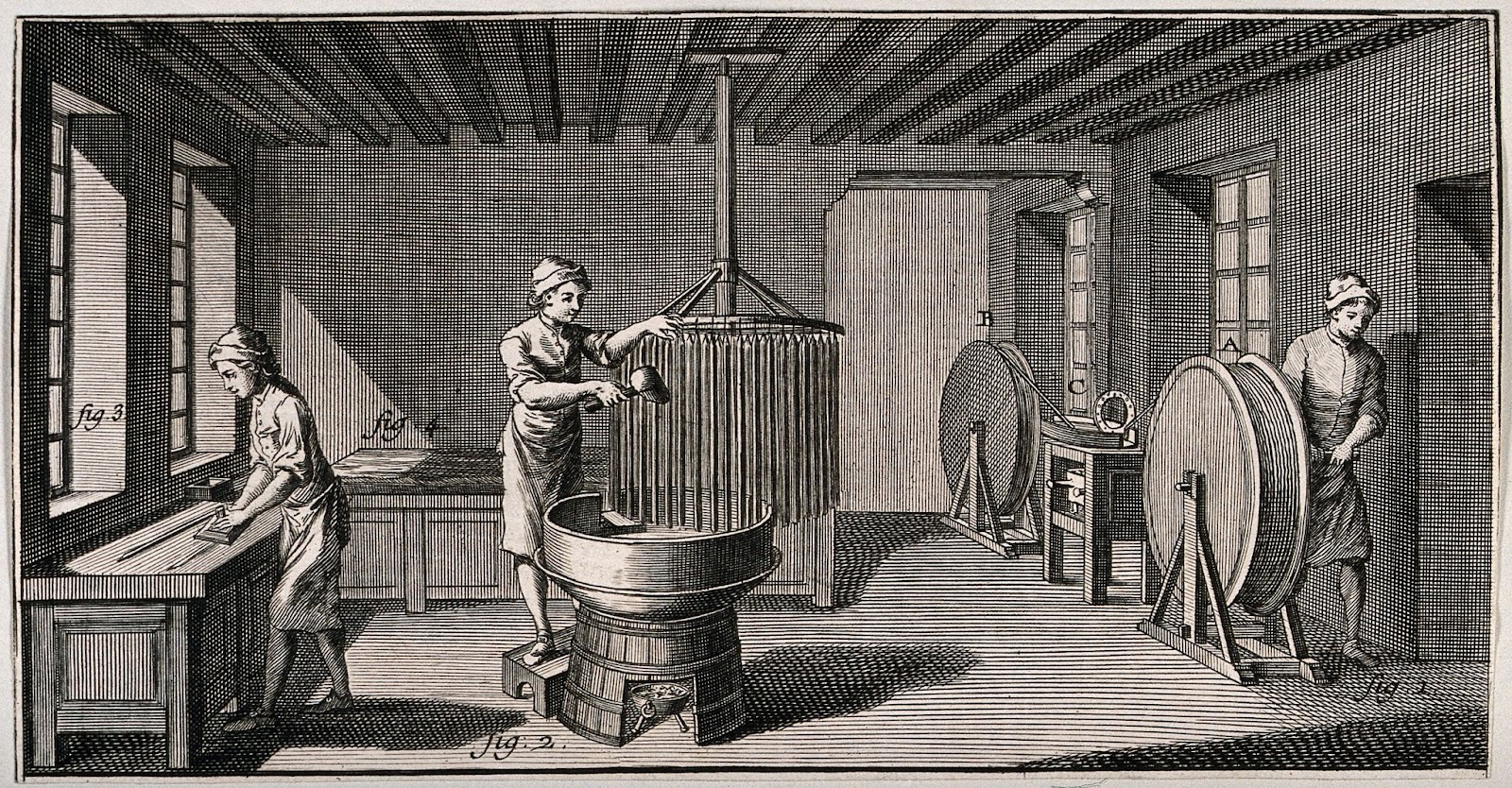
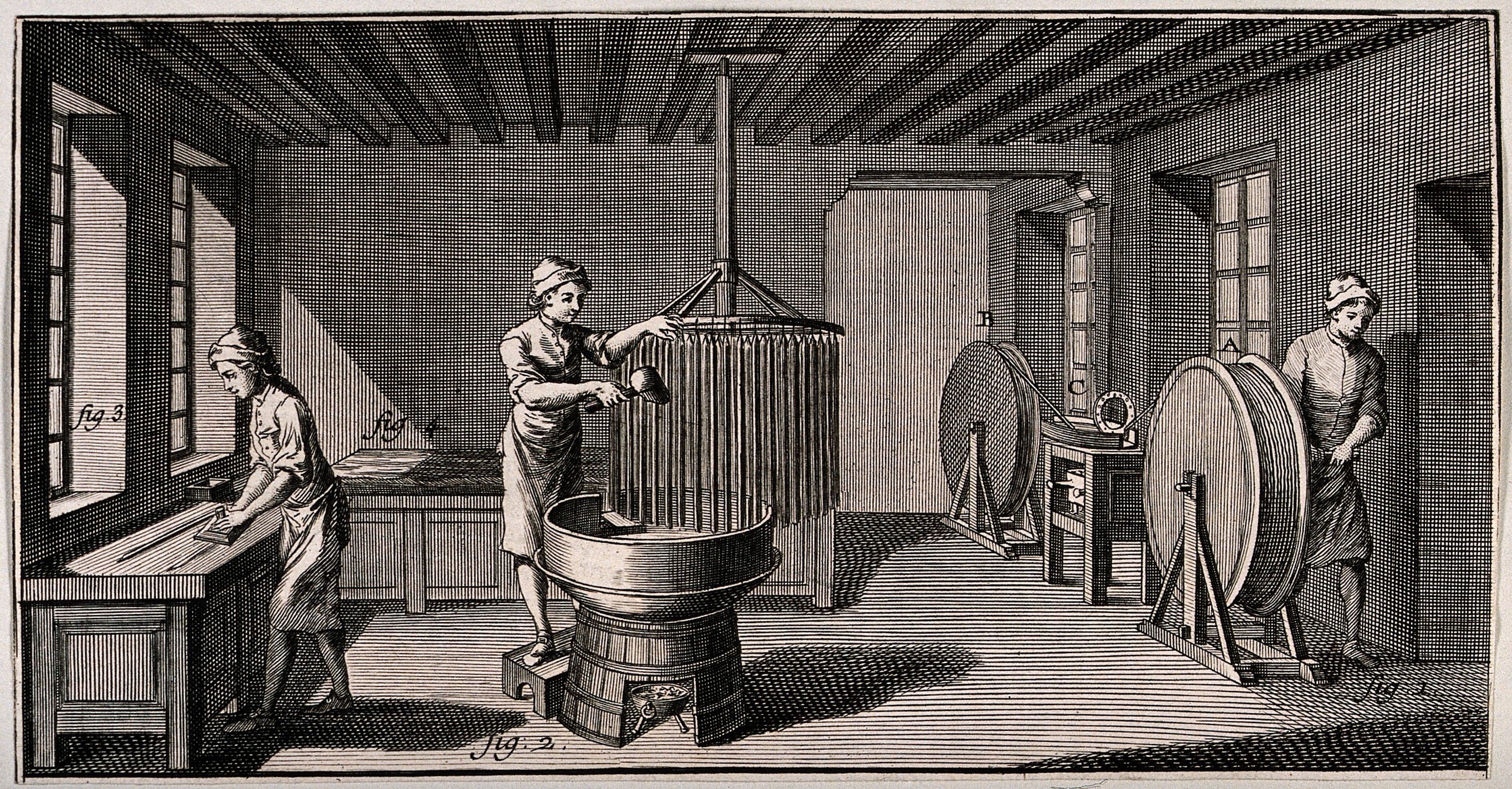
On the other hand, evidence of the use of bee wax for ritual or medical purposes is documented in numerous ancient medicinal writings from different civilizations such as Ancient Egypt, Greece, or Rome, among which Galen's treatments stand out (Bogdanov, 2009, p. 2). However, to document the use of candle wax as we know it today, we have to wait until Roman times when archaeological records start accumulating numerous candelabra and candle stands. We must clarify here that candles from this period would bear little resemblance to modern paraffin-based candles, which are odorless and colorless or artificially colored. Primitive candles were made either of beeswax or animal tallow. The technique involved repeatedly dipping the wick in liquid wax or tallow until it hardened into a candle. This process began by coating the wick with wax or tallow and shaping it by hand, later evolving to immersion techniques (Figure 4) and eventually mold-making methods. Although beeswax candles offered longer burn times and better scent, their cost made them products only affordable for wealthier classes, relegating the general population to using tallow candles or oil lamps (Carmona Ruiz, 2000, p. 387). There are very interesting documents from the Middle Ages that describe the process of making both beeswax and tallow candles, primarily made from cow fat (Vega, 2011, p. 161). Notable examples include ordinances issued in the 15th century in Córdoba or Seville specifying the exact weight of beeswax and tallow candles for candle makers (Córdoba de la Llave, 1990, p. 787).
After candles, the next leap in lighting will take us to gas lamps, followed by electric light bulbs and electricity entering much of the world. But for that we'll have to wait until the next episode.
References
Albert, R. M., Berna, F., & Goldberg, P. (2012). Insights on Neanderthal fire use at Kebara Cave (Israel) through high resolution study of prehistoric combustion features: Evidence from phytoliths and thin sections. Quaternary International, 247, 278-293. https://doi.org/10.1016/j.quaint.2010.10.016
Beaune, S. A. de, and White, R. (1993). Ice Age Lamps. Scientific American, 266(3), 108-113. https://www.academia.edu/416951/Ice_Age_Lamps
Bogdanov, S. (2009). Beeswax: Uses and Trade. In S. Bogdanov (Ed.), Beeswax book (pp. 1-17). Bee Product Science Publishing.
Carmona Ruiz, M. A. (2000). Apiculture in Seville during the Late Middle Ages. Anuario de Estudios Medievales, 30(1), 387-421. https://doi.org/10.3989/aem.2000.v30.i1.501
Chazan, M. (2017). Toward a Long Prehistory of Fire. Current Anthropology, 58(S16), S351-S359. https://doi.org/10.1086/691988
Córdoba de la Llave, R. (1990). The candle-making trade in medieval Cordoba: Beekeeping and wax work in the 15th century. Congreso de jóvenes historiadores y geógrafos: Actas I, Vol. 1,, 777-790.
Ekirch, P. A. R. (2006). At Day’s Close: A History of Nighttime. W&N.
Garvin Arcos, L. (2016). Approaching the world of tattooing in prehistory: An experimental case study on Ötzi's tattoos. Boletín de Arqueología Experimental, 11, 45-75.
Medina, M. Á., Cristo, A., Romero, A., & Sanchidrián, J. L. (2012). Another point of light: Static illumination in Paleolithic sanctuaries: The example of the Nerja Cave (Málaga, Spain). In J. Clottes (ed.), L’art pléistocène dans le monde. Actes du Congrès IFRAO, Tarascon-sur-Ariège, septembre 2010 – Symposium «Art pléistocène en Europe» (pp. 105-121). Société préhistorique Ariège-Pyrénées.
Medina-Alcaide, M. Á., Garate, D., Intxaurbe, I., Sanchidrián, J. L., Rivero, O., Ferrier, C., Mesa, M. D., Pereña, J., & Líbano, I. (2021). The conquest of dark spaces: An experimental approach to lighting systems in Paleolithic caves. PLOS ONE, 16(6) https://doi.org/10.1371/journal.pone.0250497
Stapert, D., & Johansen, L. (1999). Flint and pyrite: Making fire in the Stone Age. Antiquity, 73(282), 765-777. https://doi.org/10.1017/S0003598X00065510
Vega, T. C. (2011). Castilian medieval recipes on wax work. Meridies, 9, 151-170.


Comments