

Introduction
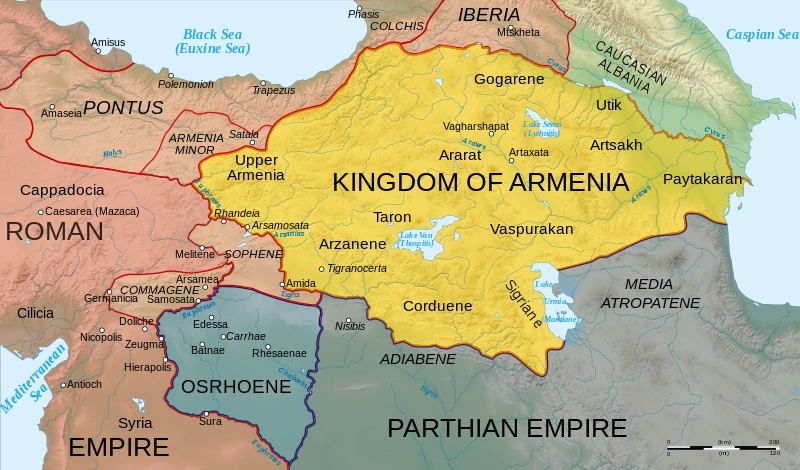
The origin of Christianity developed at the intersection of three continents and was influenced by the presence of two great empires, namely the Roman Empire and the Parthian Empire. The early followers of Jesus spread in all directions with the aim of disseminating the word of Christ to all peoples of the world. In the region of Asia under Roman influence, Christians were persecuted not due to their religious characteristics but because of their refusal to worship the imperial cult, one of the main pillars of the Roman State. Conversely, in eastern territories, the first Christian communities developed more easily due to the more tolerant and open policies towards different cultures and religions that coexisted in Parthian territory.
Between the Roman Empire and the Parthian Empire lay a series of minor kingdoms that had some degree of independence, although they were heavily influenced by the great powers surrounding them. One of these kingdoms was the kingdom of Osroene, whose capital was the city of Edessa and its king, the legendary Abgar V.

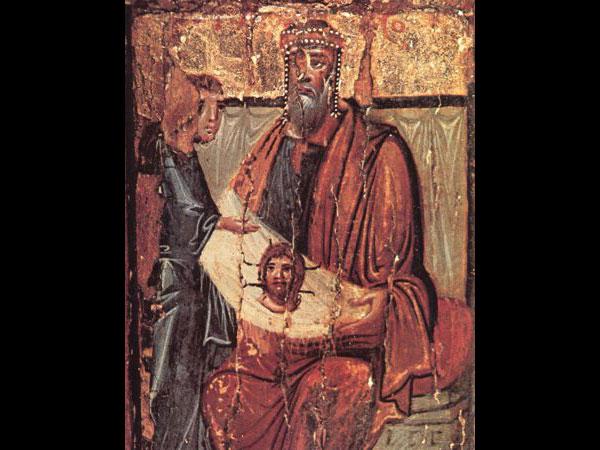
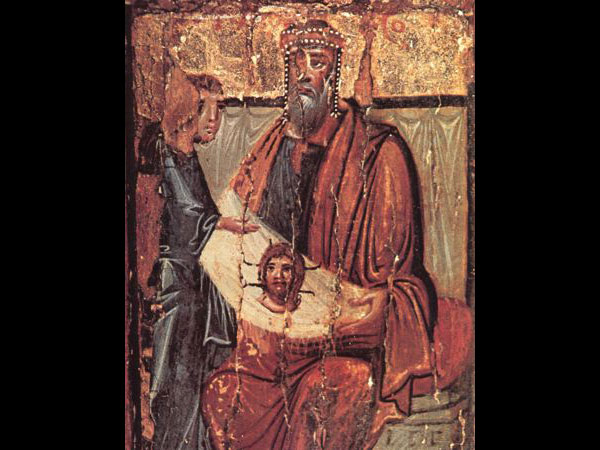
The first testimony we have about this story is found in the work Ecclesiastical History by Eusebius of Caesarea, written in the first half of the fourth century. According to the tradition initiated by Eusebius, Abgar suffered from an incurable skin disease and learned about a holy man who was performing seemingly impossible healings in Jerusalem. The king of Edessa, desperate to find a cure, decided to send him a letter to Jesus inviting him to his city to be healed, and at the same time offered him half of his kingdom since he had heard that the Jews were conspiring against him. Jesus received the letter and considered Abgar worthy of receiving an answer. In this one, Jesus rejected the king's offer since he claimed that he still had a mission to fulfill. Nevertheless, he promised to send one of his followers, Thaddeus, to heal him. Additionally, in some later traditions, he also blessed the city of Edessa so that no enemy could conquer it ever (Guscin, 2009:1-4).
Once the Ascension took place, Thaddeus arrived in the Syrian city and performed several miraculous healings, including that of King Abgar. However, his mission did not end there but also evangelized the Syrian kingdom, an event of great importance since according to this apocryphal tradition the kingdom of Osroene became the first Christian state in history.
The apotropaic value of the legend
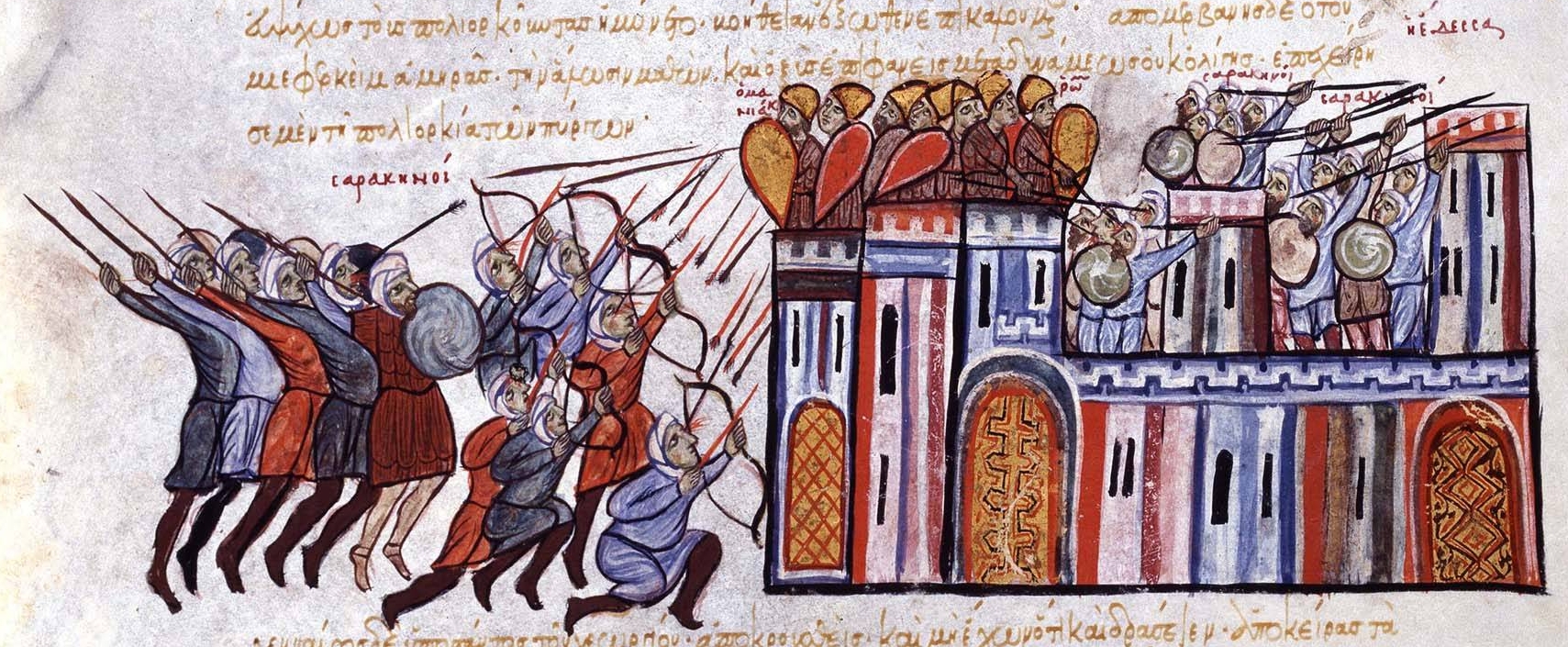
The popularity of this tradition was based largely on the fact that it was a story claiming to have been written by Jesus himself. Furthermore, in his response he blessed the Syrian city, an element that had great importance in the worldview of Edessa's citizens who needed any kind of help, even divine, to face the continuous sieges they were subjected to due to the strategic importance of the city.
Gradually, this mystical, sacred, and even magical value permeated society despite the correspondence having been declared apocryphal by the Gelasian Decree in 494 (Gurinov, 2019:84-114). The exchange of letters between Jesus and Abgar had become the most popular episode of the entire legend. The text contained in this correspondence, especially Jesus' response, was inscribed on numerous supports throughout the Christian world with a clearly apotropaic purpose, which undoubtedly favored the development and persistence of this tradition.
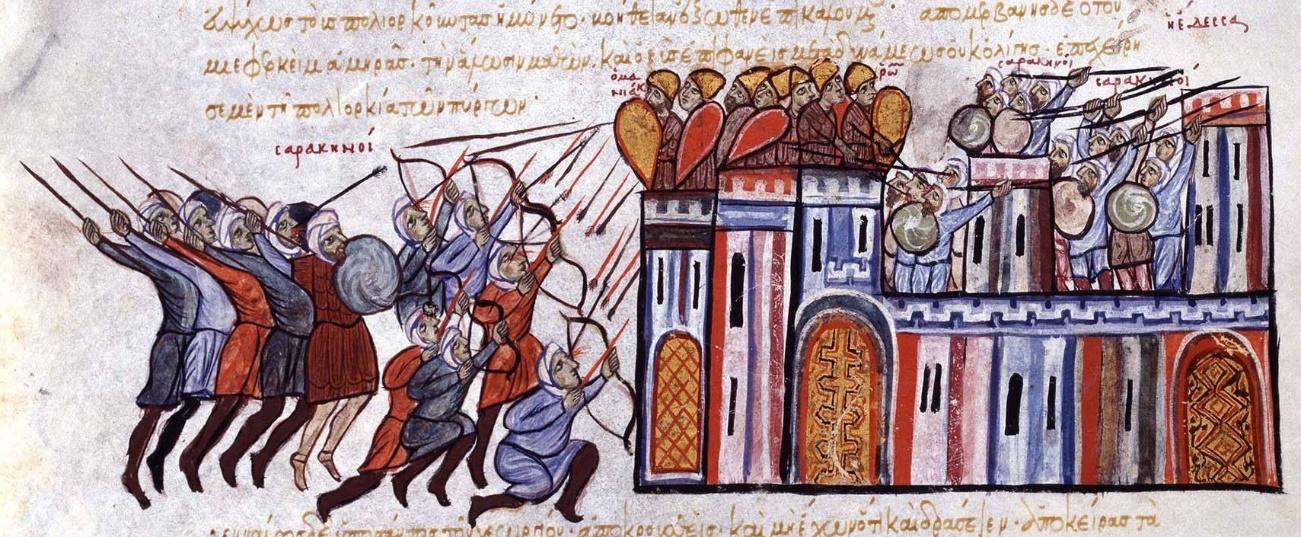
Among the testimonies that have reached us about this legend, there are two examples that perfectly demonstrate the magical derivation that the Abgar and Jesus legend underwent.
The first is an inscription found in the city of Philippi (Macedonia), dating from around the 5th century. The inscription presents both letters and was found at the gate of the ancient wall. Several researchers claim that the place where the inscription was found has great importance because the authors possibly intended to reflect the divine blessing of Christ on their own city. However, this fact may seem somewhat strange since in the letters, the sacred blessing was directed solely to Edessa and not elsewhere. Nevertheless, this is a common occurrence within Christianity, as places with significant symbolism such as the Holy Sepulchre have been reproduced in entirely different locations from their place of origin. Therefore, those who made the inscription were well aware of the tradition of correspondence and created their work attempting to establish a symbolic parallelism (Lidov, 2007:195-212).
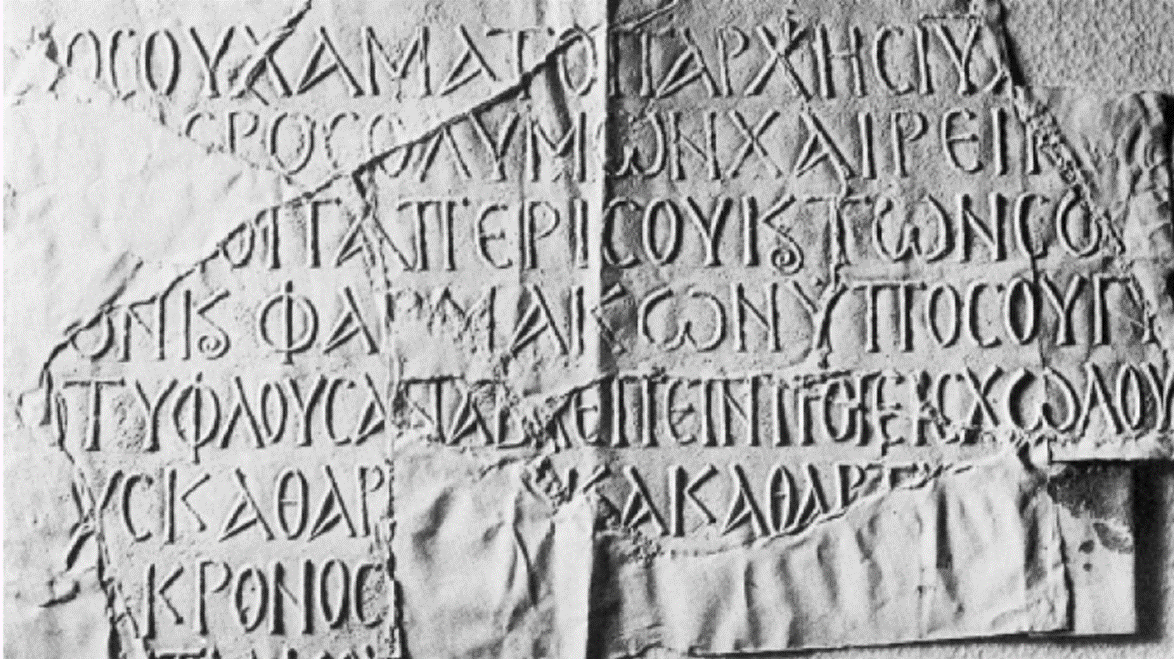
On the other hand, we have the case of a parchment preserved in the Imperial Library of Vienna, Cod. Theol, graec. 315, edited by Lipsius and dated to the second half of the fifth century, some years after the Council of Chalcedon (Gottheil, 1891:268-277). The purpose for which this papyrus was made is perfectly reflected in the first lines:
αὓτη δὲ μου ἐπιστολὴ ὅπου ἄν προβληθῇ εἴτε ἐν δίκῃ ἤ ἐν δισκαστηρίῳ, εἰτε ἐν ὁδῷ εἴτε ἐν θαλάσσῃ, εἴτε ἐν ῥηγιῶσιν εἴτε ἐν πυρέσσουσιν ἤ φρικιῶσιν ἤ εκβράζουσιν ἤ κατάδεσμον ἔχωσιν ἤ ὑπερβρασιν, ἤ φαρμακευθεῖσιν ἤ ὅσα τούτοις ὅμοια, διαλυθήσονται. ἔστω δὲ ὁ φορῶν αὐτὴν ἄνθρωπος ἀπεχόμενος ἀπὸ παντὸς πονηροῦ πράγματος, καὶ λέγετω.
"Wherever this appears, my epistle, whether in court or tribunal, whether on the road or at sea, whether with those who have chills or with those who have fever or tremble from fever or are agitated or are bound by magic knots or drugged or anything similar to these (things), will be released."
As can be seen in the previous examples, what was originally a literary text evolved towards a magical use derived from the great power attributed to words supposedly written or mentioned by Jesus himself.
Conclusions
As a conclusion of this work, I would like to highlight the main ideas that have been reflected throughout its development. Regarding the origin of this legend, there are various theories pointing to Eusebius of Caesarea having written his work with apologetic purposes and distorted the origins "heretical" of Christianity in Edessa (Corke-Webster, 2017:563-587). The author's aim would have been to create a new image of Jesus and Christianity among the society of the fourth century and end pagan criticisms.
In this way, it explains why no source prior to Eusebius' work has reached us despite his claim that he had taken information from Edessa's royal archives and simply translated it into Greek for easier dissemination throughout the Christian world. Regardless of its origin, it is undeniable that this literary text was used as an apotropaic element. This phenomenon can be seen due to the great power attributed to a written document by Jesus himself. The modifications and variations that the legend underwent over centuries were always aimed at focusing on and fostering the magical use of correspondence.
The case of the magical derivation of this apocryphal tradition is not an isolated one, as there are several examples of using fragments of the Iliad and Odyssey for magical purposes (Collins, 2008:104-131). Additionally, there are several cases of Jewish biblical texts used to ward off the evil eye and demonic entities (Bohak, 2019:70-122). Therefore, it can be hypothesized that the apocryphal Neotestamentary tradition of Abgar and Jesus responds to a well-established and developed syncretic magical tradition.
BIBLIOGRAPHY
Bohak, G. (2019) Babylonian Jewish Magic in Late Antiquity: Beyond the Incantation Bowls. In Y.Friedmann and E. Kohlberg, E. (eds.) Studies in Honor of Shaul Shaked (70-122). Jerusalem: The Israel Academy of Sciences and Humanities.
Collins, D. (2008) Magic in Ancient Greek World. Oxford: Blackwell Publishing Ltd.
Corke-Webster, J. (2017). A Man for the Times: Jesus and the Abgar Correspondence in Eusebius of Caesarea’s Ecclesiastical History”, HTR 110,4, 563-597.
Gottheil, R.J. H. (1891). An Arabic Version of the Abgar-Legend, Hebraica, 268-277.
Gurinov, E. (2019) The Blessed City: Edessa and the Abgar Legend in the Age of the Crusades. In O. Keller (ed.) Opere et Veritate: Sammelband von wissenschaftlichen Werken, gewidmet dem 10-jährigen Jubiläum der Zusammenarbeit zwischen den Historikern von weißrussischen Universitäten und der Universität Tübingen (84-114). Minsk:RIVSH
Guscin, M. (2009) The Image of Edessa. Leiden:Brill.Lidov, A. (2007) Holy Face, Holy Script, Holy Gate. Revealing the Edessa Paradigm in Christian Imagery. In A. R. Calderoni, G. Wolf and C. B. Dufour (eds.) Intorno al Sacro Volto. Genova, Bisanzio e il Mediterraneo (secoli XI-XIV)(195-212). Venezia: Marsilio.


Comments