

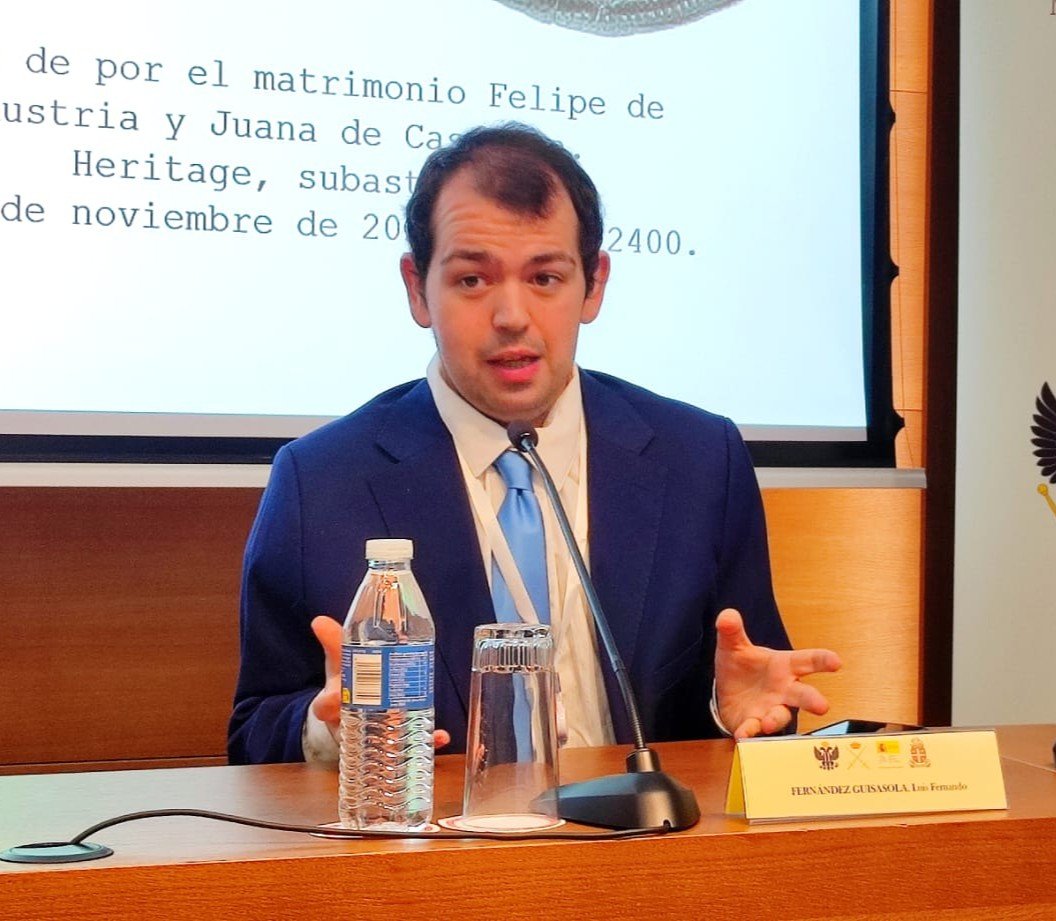
Tokens are coin-like objects minted during the Late Middle Ages and throughout the entire Modern Age, and the potential information that can be extracted from their iconographic study.
What are tokens?
In the words of Miguel Ángel Ibáñez Artica (2009, p. 3), tokens are defined as "metal pieces with a coin-like appearance, used to perform accounting operations during the Middle Ages and early Modern times."
It is important to note that while tokens may have a form and materials reminiscent of coins, they should never be confused with them. Coins can also be studied from an iconographic perspective; however, these are always backed by law (Francisco Olmos, 2026). As for tokens, they could be issued by the governing power or by individuals, but they are not regulated by any documentation and therefore do not have a completely legal value.
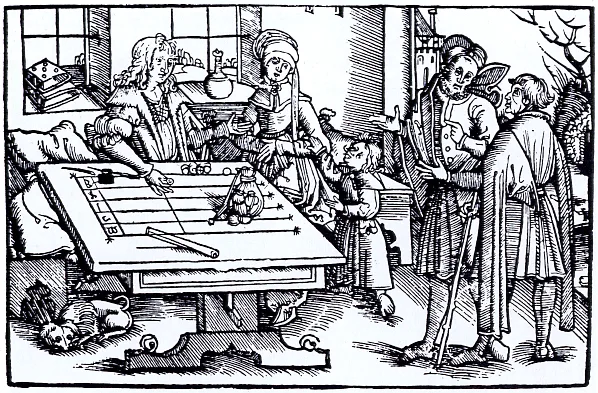
Furthermore, studies show that they had a very specific purpose, as they were primarily used to perform calculations. Typically, there was a table with engraved values (Figure 1), so the placement of each piece determined its value.
History of tokens
Although there are testimonies of tokens in England from the mid-12th century, the first known piece is named after Blanche of Castile (1188-1252), wife of Louis VIII and mother and regent of Louis IX of France. Other territories began minting tokens, appearing collectively in regions such as the Netherlands and German territories in the 14th century, Switzerland in the 16th century; and Bohemia in the 17th century (Shärig, 2003, pp. 33-37).
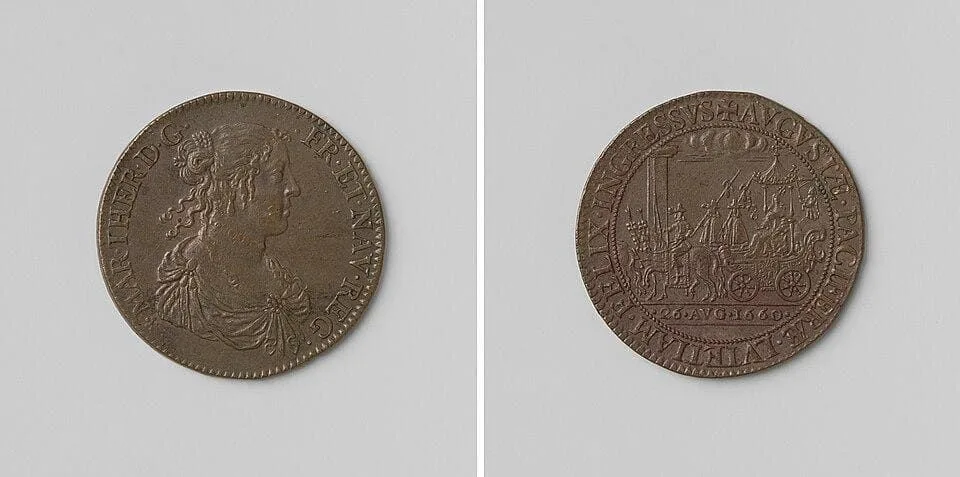
While they appeared later than in other places, tokens from the Netherlands stood out both for the number of pieces minted and for their visual richness during the High Modern Age. In this regard, it is worth clarifying part of Ibáñez Artica's definition, as tokens continued to be minted until the end of the Modern Age. Even though at the beginning of the 17th century there was not such a varied number and with so much visual richness, as can be seen in simpler tokens named after Empress Maria Theresa (Figure 2), they were still being minted up to the dawn of the Contemporary Era. In the case of the Netherlands, they continued to be minted until the end of the 18th century (Fernández Guisasola, 2026, p. 208-209).
Study of tokens
In a certain sense, the study of tokens resembles that of medals, as in both cases pieces are minted by someone with prestige who chooses types according to their particular interests. However, there are two substantial differences: First, the engraver of medals was often recognized as an artist, while tokens do not have any mark identifying the person responsible for their design. Second, medals were considered prestigious items that were minted in very limited numbers and only served for collecting (Beivide Pérez, 2026, pp. 43-45). In contrast, and as already observed, tokens had a practical purpose, and it is therefore assumed they were minted in greater quantities and had a wider distribution within small commercial circles.
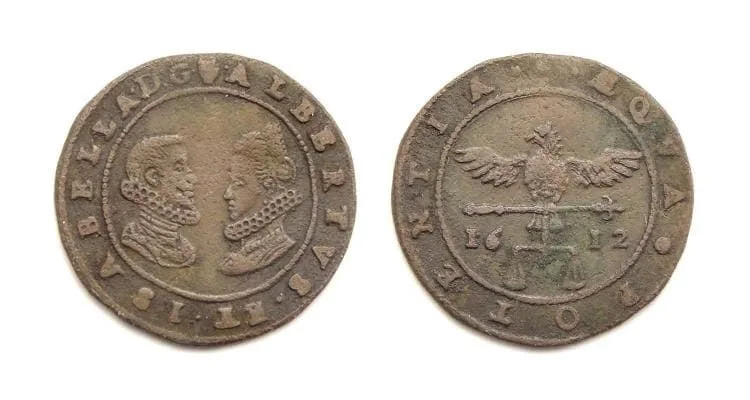
In the Spanish case, tokens minted in the Netherlands are of particular interest due to the shared history between both territories (Figure 3). This period has a skewed perception influenced by historicist myths that are sometimes far from historical reality (Rodas Romero, 2023, 2024; Ortiz Izquierdo, 2024). Most of these pieces were minted by the Chamber of Finances, one of the three Councils that supported government action (Schepper, 2018). Although they could also be issued by individuals or the northern government. Tokens from the Netherlands reflect how certain events of this period were seen in this era, from a Dutch perspective, such as the advent of the House of Austria, disputes with England in the 16th century, or the War of Spanish Succession (Fernández Guisasola, 2026).
It is important to note that, despite the valuable information that could be obtained from these pieces, there are few studies on them. The reference work remains J.F. Dugniolle's (1876-1880, 4 vols) catalog in the 19th century, which has yet to be surpassed and forces anyone interested to confront its own limitations of the time. With this catalog, there are references to descriptions of pieces that do not quite fit with existing samples or have elements misidentified, either due to the loss of tangible examples or because many times the recapitulation was done based on testimonies. Nevertheless, studies of specific pieces have been conducted, such as the token minted for propaganda purposes for Perkin Warbeck, who claimed to be Richard of Shrewsbury, a missing son of Edward IV (Archivald and Dykes, 2020).
Conclusions
In conclusion, tokens were everyday objects used in commercial environments but minted by high-level institutions or individuals. This implies that behind their iconography there was a propagandistic discourse, much like with coins and medals. Therefore, they are a source of study that has yet to receive adequate attention. Tokens from the Netherlands stand out for quantity, visual richness, and especially because they show contemporary perspectives on historical events believed to be well-known.
Bibliography
Archivald, M. and Dykes, D. (2020). The medallic jetton of Perkin Warbeck. British Numismatic Journal, 90, 139–163.
Beivide Pérez, M. (2026). Heraldry as an Identifying Element in the Medal. Hidalguía: the journal of genealogy, nobility and arms, 401, 41-65.
Dugniolle, J. F. (1876-1880). The Historical Token of the Seventeen Provinces of the Netherlands, 4 vols. R. Gobbaerts.
Fernández Guisasola, L. F. (2026). Tokens: A Little-Studied Source. Hidalguía: the journal of genealogy, nobility and arms, 401, 191-212.
Francisco Olmos, J. M. (2026). The Coin as a Basic Source in Emblematic Study. Hidalguía: the journal of genealogy, nobility and arms, 401, 213-236.
Ibáñez Artica, M. A. (2009). Medieval Tokens with the Shield of Navarre, Archaeological Studies, 25, 5-142.
Ortiz Izquierdo, S. (2023). The Preponderance of the Spanish Monarchy in the Sixteenth Century. ArqueoTimes, 11, 12-15. https://arqueotimes.es/la-preponderancia-de-la-monarquia-hispanica-en-el-s-xvi/
Rodas Romero, D. (2023). The Spanish Black Legend: Historical Subjectivity. ArqueoTimes, 6, 2023, 20-22. https://arqueotimes.es/la-leyenda-negra-espanola-subjetividad-historica/
Rodas Romero, D. (2024). The Spanish Black Legend: Historical Subjectivity (II). ArqueoTimes, 9, 15-18. https://arqueotimes.es/la-leyenda-negra-espanola-subjetividad-historica-ii/
Schärlig, A. (2003). Counting with Tokens: Calculation and Account Tables from the Middle Ages to the Revolution. Presses polytechniques et universitaires romandes.
Schepper, H. (2018). The Councils "A latere principis u de su theniente generalŭ in the Low Country of the Austrias, 1577/78-1609. A Presentation". Philostrato: journal of history and art, Extra 1, 11-40.


Comments