
An approach to the study of the Middle Ages
Is the Middle Ages a dark period? What is the origin of this idea about the medieval era? Why does it still prevail in our collective imagination today? In Eduardo Baura García's words, the Middle Ages are... «the era that has earned the most prejudices, simplifications, and generalizations» (Baura, 2012, p. 15). For Sandra Sáenz-López Pérez: «Thinking about the Middle Ages still entails filling it with ignorance, misogyny, intolerance...» (Sáenz, 2020, p. 70).
Throughout the centuries, multiple perspectives and interpretations have emerged around the Middle Ages, shaping this period of history from various historical, cultural, philosophical, political, and economic standpoints. No moment in our history is free from judgments and interpretations, nor from a bias-ridden view of the past from the present. The analysis of history is also subject to different agents acting upon it, articulating or disarticulating the historical discourse according to its adaptation to the prevailing trend at any given moment. It is for this reason that, over a series of articles, we aim to address how the concept of Middle Ages has been constructed and evolved, attending to different historical stages: Renaissance, Enlightenment, 19th century, 20th century, and 21st century.
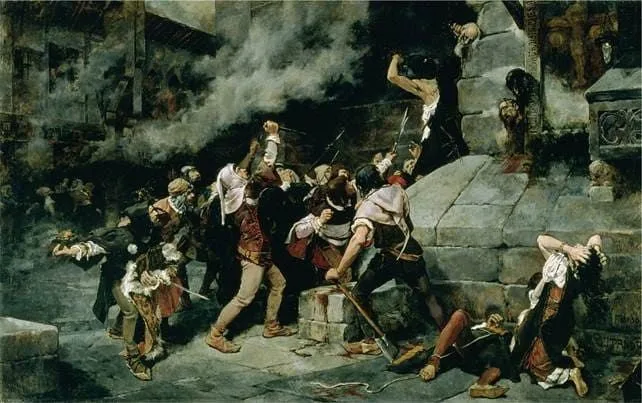
The Middle Ages have been projected in popular culture as an era of social and scientific stagnation, also morally, understanding that there is a distance with the Classical Antiquity and its values. In this sense, it is interesting to attend to other concepts such as Late Roman Age, Late Antiquity, or Late Ancient Period, which also enclose a problematic in terms of their understanding, chronological attribution, and own content in relation to the beginning of the medieval period; this terminology is understood as the transition period between antiquity and the Middle Ages (Santana, 2018, pp. 197-200).
Neither in Western Medieval, nor in the eastern territories of the Roman Empire (known as Byzantine Empire), nor in the Persian and Islamic worlds did there exist an abandonment of the ideas and presuppositions of the classical world. The Middle Ages, like other periods of history, saw a great development of material, intellectual, and symbolic aspects (Sáenz, 2020, p. 70). This is something that has been overcome in academic circles as demonstrated by numerous publications and research carried out over decades, with an upsurge particularly from the mid-20th century onwards and continuing to this day (Baura, 2012, p. 14). However, even today the Middle Ages are commonly associated with disorder, hunger, plague, poverty, and the abuses of nobility over peasants (González, 2006, pp. 117–118).
The initial problem we face when addressing this issue is that we are dealing with a historical period truly extensive, spanning ten centuries, whose chronological margins commonly accepted range from the fall of the Western Roman Empire in 476 AD to the discovery of America in 1492 (Sáenz, 2020, p. 70) or the fall of Constantinople in 1453 (Murillo, 2014: 528; González, 2006, p. 125).
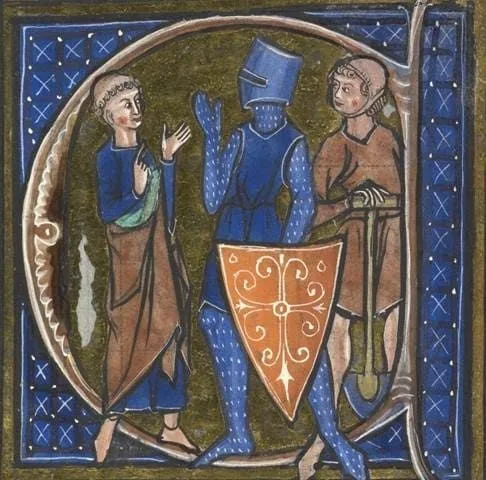
Other events that take place in the 15th century, such as peace after the Hundred Years' War, the invention of the printing press, the definitive formation of European nation-states, the schism of Christianity and even the Renaissance itself, can be understood as elements influencing the end of the Middle Ages and the beginning of the Modern Age. Similarly, we find ourselves in a complex era, with many protagonists, events, and an extensive territorial space (Villalba y Novoa, 2015, p. 13).
The construction of the Middle Ages in Renaissance humanism
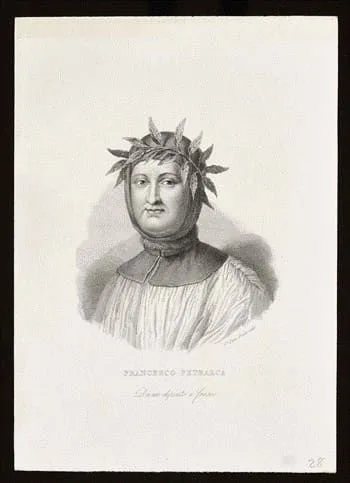
It is during the Renaissance, at the end of the 15th century, within Italian society, when a view towards Classical Antiquity begins to take shape, understanding it, from the worldview of the time, as a glorious period. The modern man would understand, based on Petrarch's presuppositions —considered the father of humanism— that the Middle Ages was a sort of «intermediate space» of darkness and despondency, far from classical perfection (Villalba y Novoa, 2015, p. 17).
In his poem Africa (1338), Petrarch left a record of a desire for times that he yearned for and which would signify a new Golden Age: «Dispersed the shadows, our grandchildren will walk again in the pure clarity of the past». (Villalba y Novoa, 2015, p. 18).
The Middle Ages is then understood, from its very origin, in a derogatory manner. The conception of the term itself, interpreting it as an era situated between Antiquity and Modern Age (Baura, 2012, p. 11). This vision would impose itself in Western Europe during the 15th, 16th, and 17th centuries, considering that there is an assimilation between the ancient world and the new one, with the goal of the latter emulating the former (Villalba y Novoa, 2015, p. 18). This tripartite schema of a dark era between two culturally more notable periods has its origins in the Renaissance (Baura, 2012, p. 11), with the Middle Ages being seen as an «uncivilized» period compared to the cultural splendor of the classical and Greco-Roman world (Murillo, 2014, pp. 527-528). From this position, it is evident that the Middle Ages are understood as a vast «parenthesis» of nearly a thousand years (Villalba y Novoa, 2015, p. 18).
The Dark Ages had been born. With this, a profound and radical historical break had occurred...it was an ideological creation of great significance; not without reason, despite its inapplicability to reality, the ideological conception would persist for centuries, reaching our times (Baura, 2012, p. 22).
The historian and humanist Flavio Biondo (1388-1463) proposed limiting this period to the fifth century, with the fall of the Western Roman Empire, but without giving it a name. On the contrary, Giovanni Andrea dei Busi (1417-1475), bishop of Alesia, a few years later, would baptize it as Media Tempestas. In 1469, in a letter from the bishop, one can read: «sed mediae tempestatis tum veteris, tum recentiores usque ad nostra tempora» (Valdeón, 2003, p. 311). The expression Media Tempestas referred to this intermediate time between Antiquity and the Renaissance humanism (Valdeón, 2003, p. 311). Subsequently, we will see how historians and philologists would use terms such as Media Aetas or Media Tempora, with the term Medium Aevum eventually prevailing.
This conception of the Middle Ages is also subject to a philological question, as it was understood that Latin had been adulterated and abandoned, an unmistakable feature of classical tradition and Roman heritage (Valdeón, 2003, p. 312). The reality is that there was no break in the Middle Ages with classical tradition; rather, this continued and persisted, marking much of medieval worldview, making the transition between Antiquity and the Middle Ages another stage of historical development (Tomàs, 2017, p. 27).
Conclusions
As we have observed through this analysis, the idea of a dark Middle Ages, still prevalent in part in our collective imagination today, has its origins within Renaissance humanist thought. From this perspective, the Middle Ages would be understood as an intermediate period between Classical Antiquity and the Renaissance, characterizing these "Middle Times" as an era submerged in darkness. A Media Tempestas, which we now know did not characterize it.
Bibliography
Baura, E. (2012). The origin of the historiographical concept of dark Middle Ages. Petrarch's work, Estudios Medievales Hispánicos, 1, 7-22.
Fernández, D. (2018). The myth of the Andalusian paradise. Muslims, Christians and Jews under Islamic rule in medieval Spain. Almuzara.
González, C. (2006). The construction of the Middle Ages: Myth and reality, Publicaciones de la Institución Tello Téllez de Meneses, 77, 117-135.
Murillo, J. I. (2014). Rémi BRAGUE, Myths of the Middle Ages. Philosophy in medieval Christianity, Judaism and Islam, Granada: Nuevo Inicio, 2013, 342 pp. Scripta Theologica, 46, 505-508.
Sáenz-López, S. (2020). Debunking myths about the Earth in the Middle Ages. Cuadernos del CEMyR, 28, 69-96.
Santana, R. (2018). The concept of Late Antiquity: A historiographical review and methodological problems. In Cutillas, E. (coord.) Convergence and transversality in humanities: Proceedings of the VII Research Days of the Faculty of Philosophy and Letters at the University of Alicante, 197-202.
Tomàs, B. (2017). Interpretation of myth in the Middle Ages. The Watchtower. Journal of students from the Faculty of Philosophy. Universidad Pontificia de Salamanca, 17, 27-45.
Valdeón, J. (2003). Historical valuation of the Middle Ages between myth and reality. In De la Iglesia, J. I. and Martín, J. L. (coord.) Memory, myth and reality in medieval history: XIII Week of Medieval Studies, Nájera, July 29 to August 2, 2002, 311-329.
Villalba, F. J. y Novoa, F. (2015). To understand the Middle Ages. Editorial Universidad de Sevilla.
Web Resources
ViOne (2025, November 28). «Luis XIV had less power than Macron» – With Alberto Garín [Video] YouTube: https://www.youtube.com/watch?v=3pIcCHuDNgU&t=4286s


Comments