

Genealogy is a discipline that has undergone significant changes in its methods of work since the advent of what were then called New Technologies, a term that has become almost obsolete as it continues to evolve and be applied across all branches of Knowledge.
Today, rather than using the term Genealogy, we would better speak of Family History, because creating a list of ancestors and dates seems somewhat cold to me. However, reconstructing the entire historical, social, and cultural context of your family is quite different.
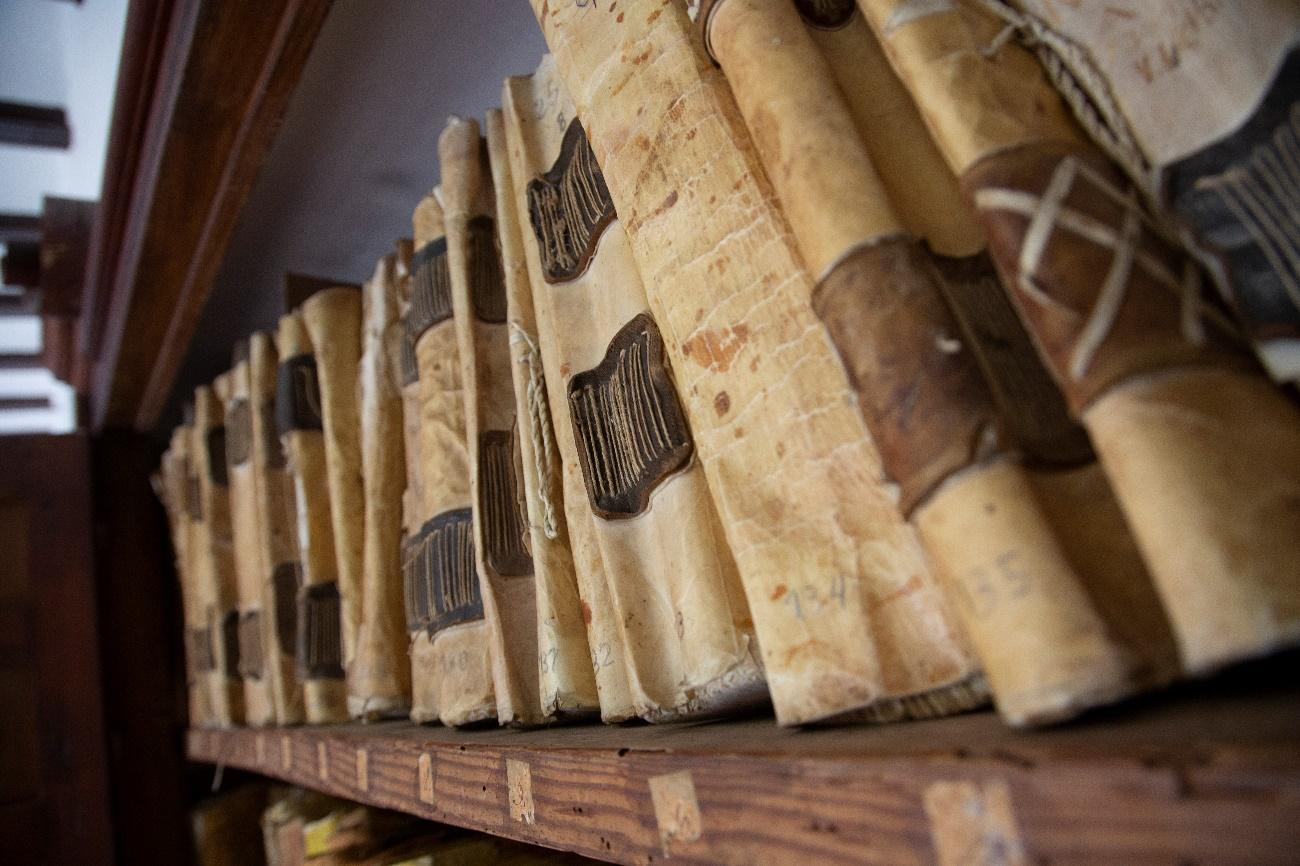
In this sense, the most important source of information that we who are involved in this field rely on is archives.
I am not an expert in archival science, but discussing it within the scope of this article seems like a rather large task to undertake.
What is clear, however, is that archives, in their various types—ecclesiastical, civil, military, municipal, and others—are one of the most important sources for conducting what we could consider "serious" work in this discipline.
Here too, much has been noticed about the influence of the arrival of the Internet to this field. Many institutions, especially those with public character, have already considered several years ago the need to have a digital copy of all their material or at least the most important parts.
The purpose of this digitization process is varied. On one hand, as a backup against possible disasters such as floods or fires that would endanger their magnificent historical documentary heritage, and on the other, to help in the conservation of the material by not having to work directly with the documents, which inevitably causes physical wear.
But clearly, for this digitization work to be done, a consistent archival process must first take place:
- The classification, that is, "to give it a structure that reproduces the process through which documents are created and were in the past" (Cruz, 2012:. p. 207).
- The description, which allows "putting the documents into service, i.e., making them useful for the entity that produces them and also for society" (Cruz, 2012.. p. 231).
Archives, especially if well preserved and organized, are like the archaeological record of an excavation: they indicate the "living history" of a particular historical moment.
For someone who wants to start building their Family History and its subsequent reflection in a genealogical tree, there are two types of archives that should be started with: ecclesiastical and civil archives.
ECCLESIASTICAL ARCHIVES
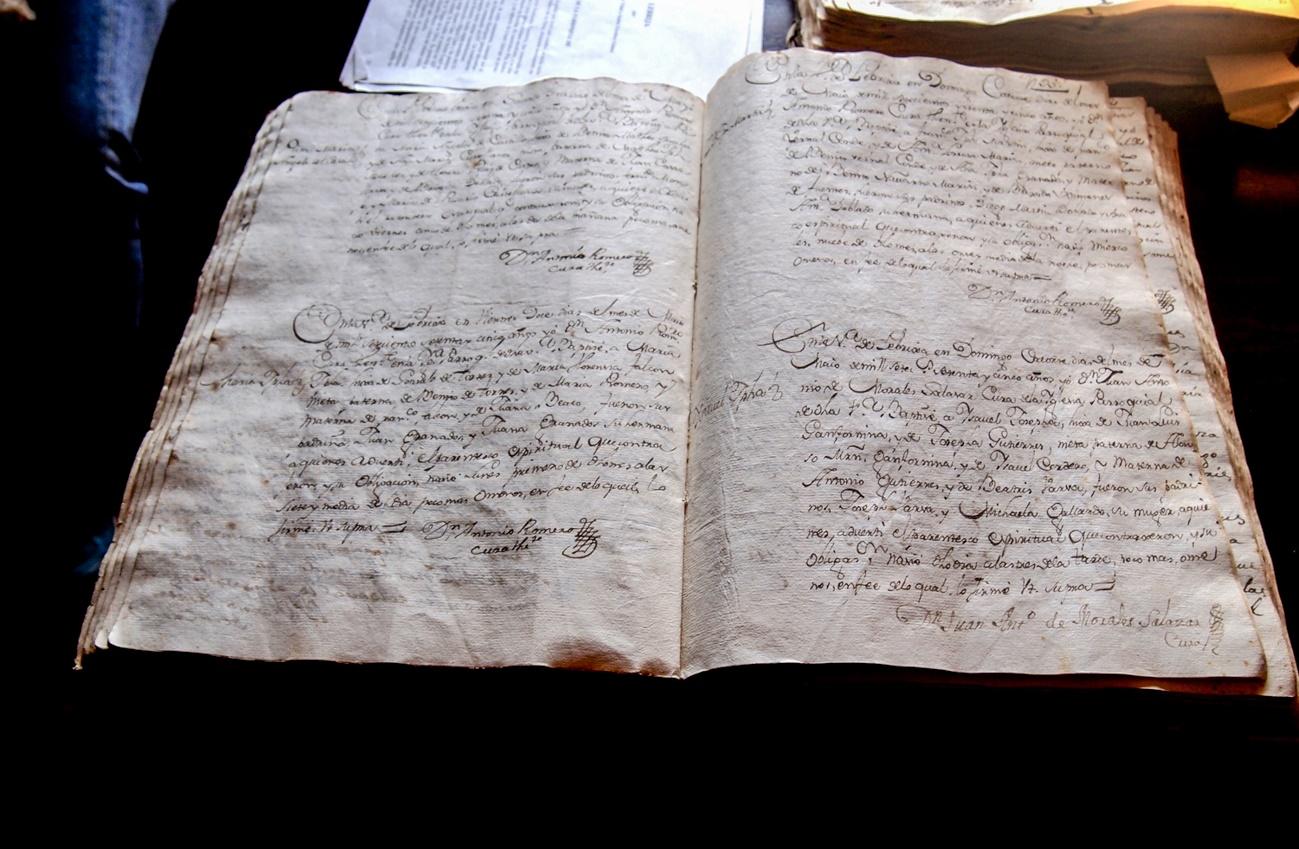
Within this group, we have parish archives and diocesan archives among others.
Parish archives reflect in writing the inscription of the Catholic Church in Spain of sacraments such as baptism, marriage, and death, among other types.
These archives are generally the oldest that exist in almost all localities if we talk about Spanish geography.
Although some parishes in Spain have records dating back to the beginning of the 14th century (it should be noted that very few), most registers began to become mandatory after the Council of Trent (1545-1563). Of course, what Trent did in this field was to put into law what many parishes were already doing as a custom. The case I know best is that of the Parish Archive of Lebrija, which contains baptismal registers dating back to 1509, and this happened in many other Spanish towns.
It should be noted that almost everyone was Christian at that time, so all of this was reflected both in baptisms, marriages, and deaths.
In the Baptismal Registers, initially only the names of the parents were recorded, and little more. Over time, as populations grew larger, it was no longer enough to identify just the parents; data on grandparents began to appear, both paternal and maternal, which greatly facilitates research. Other details also appeared, such as the street where the person baptized was born or the godparents' names, who were often relatives of those registered.
In Marriage Registers, in addition to the parents of the people getting married, the ages of the contracting parties are also recorded, which can help us locate them in Baptismal Registers.
A circumstance regarding marriages were what were called apostolic marriages. Given the sparse population of many towns and cities, if the people getting married had any ancestor up to fourth degree of consanguinity or affinity, they needed a special permission from the Catholic Church, for which they had to list their ancestors until reaching that common couple. This often led to genealogical trees being drawn in these records, making it easier to understand the relationship between the two people. If we are lucky enough to find such documentation, we will have found several generations at once. This type of documentation is usually kept in Diocesan Historical Archives.
The case of deaths provides us with genealogical information as well as an indication of the social status of the person since it also reflected the type of burial being carried out, and even the costs of such a ceremony, although this was more commonly reflected in wills.
CIVIL REGISTRY IN SPAIN
Another fundamental source for genealogical research is the information we can obtain from the Civil Registry.
Following the liberal revolutions of the 19th century, it became clear that population control could not be solely in the hands of the Church. Several attempts were made, some unsuccessful, until a more serious attempt at civil registries was launched in 1841 and lasted until 1870. These registries were kept by town halls where they still remain today, although with many losses due to political instability that characterized the 19th century in Spain.
In 1871, a Civil Registry was formed that has lasted until our day and is generally well preserved.
Currently, these civil registries have been gradually digitized over time, making searches easier. However, if one goes to them, exact dates for births, marriages or deaths must be provided; they do not conduct searches.
There are many other types of archives that can help us in our family research, but their discussion would exceed the scope of an article in this magazine. We will leave it for another occasion.
CONCLUSIONS
Both ecclesiastical and civil records are primary sources of genealogical information that should make different administrations aware of their importance for good research, not only in the field of Genealogy but also in other social, health, cultural, and many other areas.
BIBLIOGRAPHY
Cruz Mundet, J.R. (2012). Archives Science. Madrid: Alianza Editorial.
Alfaro, A. (2014). Web Genealogía Hispana, retrieved from https://www.genealogiahispana.com/archivos/los-registros-parroquiales-y-civiles-ejes-genealogicos/


Comments