

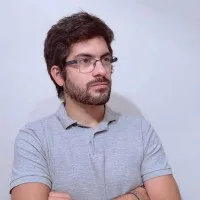
Francisco José Barrionuevo Contreras: municipal archaeologist, director of the Archaeological Museum of Jerez and specialist in the Protohistory of southwestern Iberia.
Born in Seville, Francisco José Barrionuevo Contreras is a graduate in Prehistory and Archaeology from the University of Seville, with training oriented towards Andalusian Protohistory and the study of Phoenician and Tartessian communities in southwestern Iberia. Since 1993, he has held the position of municipal archaeologist attached to the Archaeological Museum of Jerez de la Frontera, where he has directed numerous interventions in the city and its municipality, including excavations at Plaza del Arenal and research on the necropolis of Mesas de Asta, now integrated into a collaborative study project with Complutense University of Madrid.
In terms of research, Barrionuevo has focused much of his work on Protohistory in the Lower Guadalquivir region, paying special attention to Phoenician presence and the Tartessian world. He has participated in projects linked to key sites such as Castillo de Doña Blanca and Asta Regia (Mesas de Asta), contributing to the elaboration of the Municipal Archaeological Map of Jerez, a fundamental tool for managing the city's archaeological heritage.
As current director of the Archaeological Museum of Jerez, Barrionuevo has been involved in the museum’s expansion project and renovation of its exhibition narratives. He is co-author, along with Rosalía González Rodríguez, of The Guide-Catalogue of the Municipal Archaeological Museum of Jerez de la Frontera: The History of Jerez in Its Collections, a reference work that presents a wide selection of pieces from the museum's collection. Additionally, since 2020 he has presided over the Center for Historical Studies of Jerez (CEHJ), an entity through which he promotes modernization in local historical research and dissemination, organizing events such as the History Conferences dedicated to the city and its territory.

1. Before his university years, what sparked your interest in History and Archaeology? Was there a specific experience that made you think about dedicating yourself professionally to this field?
In truth, I have very vague memories of my first approach to History and Archaeology, and I cannot establish concrete causes or even pinpoint them in time. Since childhood, I always had a curiosity for general topics related to nature, human history, and architecture. In fact, during adolescence when planning possible university studies, I leaned more towards fields like veterinary medicine or architecture. Both subjects are always present in any archaeological project I develop.
On the other hand, it is a question that I have never been able to answer clearly. Perhaps I finally chose archaeology when I expanded my readings beyond school topics to historical-archaeological themes related to the Eastern world, Egypt, South America, and even the mythical Tartessos. In short, an approach to more widely disseminated topics. Worlds that I generally saw as very distant but which awakened my curiosity for the historical objects around me in a periurban area of Seville closely linked with the countryside and nature.
Perhaps what had the greatest impact on my approach to archaeology were Schulten's book on Tartessos and C. W. Ceram’s: Gods, Tombs, and Scholars.
2. Your academic trajectory has been linked from early on to Andalusian Protohistory and the archaeology of southwestern Iberia. When did you become clear that your field of interest would be Phoenician and Tartessian societies?
That moment came suddenly, already in my first years at university, when I began working on this period at one of its most emblematic sites: Castillo de Doña Blanca (El Puerto de Santa María, Cádiz), under the guidance of Professor Diego Ruiz Mata.
In these initial years, I still debated between Protohistory and Prehistory due to the attraction that Paleolithic research held for me through Professor Enrique Vallespí at the University of Seville.
Other professors also influenced this decision significantly, such as María Belén de Amos, José Luis Escacena, or Fernando Amores.
Then came work with Victor Hurtado on the El Trastejón site in Huelva, stays at foreign universities, and significant territorial studies in the Cádiz countryside, leading me to the Mesas de Asta-(H)Asta Regia site where we will continue working for several years.
3. Since 1993 you have held the position of municipal archaeologist attached to the Archaeological Museum of Jerez and have directed significant interventions such as excavations at Plaza del Arenal or work on the necropolis of Mesas de Asta. If you had to choose some milestones in this archaeological activity in the city and its municipality, which would you highlight and why? What have they contributed to understanding the historical evolution of Jerez?
The statement itself summarizes the two main milestones of my career: excavations at Plaza del Arenal and the necropolis of Mesas de Asta or the (H)Asta Regia site in its entirety. These spaces have allowed us to develop methodological bases for an integrative archaeology of the territory, where countryside and city form an inseparable binomial that coexists and shapes the landscape over time, whose formation and future perspectives can be unraveled through archaeological work models that allow a logical approach to Jerez's historical evolution and its immediate surroundings.
The (H) in Asta is a declaration of intent, not innocent. After legendary debates, it will ultimately turn out that this H also forms part of the Tartessian name of the city.
The study of the necropolis of Mesas de Asta emerged during the development of a general research project aimed at understanding the historical evolution of the space between the mouths of the Guadalquivir and Guadalete rivers, allowing us to develop many lines of investigation that are still ongoing or just beginning.
For Jerez in general and Plaza del Arenal specifically, interventions were motivated by the need to address the loss of archaeological information caused by urban development, similar to other historical cities. It was therefore necessary to create a work system which has ultimately been reflected in the Municipal Archaeological Map: Jerez 1. The Urban Core, coordinated from the City Council of Jerez by then director of the Municipal Archaeological Museum of Jerez, Rosalía González Rodríguez.
Arenal was and remains a project rethought with an extensive interdisciplinary team.
To highlight other interventions that have been many, especially those detailed in the mentioned Municipal Archaeological Map, particularly Arenal, vaults at Santo Domingo Cloister, the church of Compañía or the museum itself.
In summary, interventions in various urban and rural areas with a broad territorial projection that have allowed me not to focus on specific sites but rather understand history and archaeology with a wide perspective influenced by multiple interconnected elements through human activity.
My participation in these projects has mainly developed within the City Council of Jerez as an archaeologist attached to the Municipal Archaeological Museum, directed at that time by Rosalía González Rodríguez. We have collaborated with numerous technicians from various municipal areas along with other institutions. I especially highlight the collaboration with my colleagues at the museum: Laureano Aguiñlar Moya (archaeologist) and Carmen Martín Mochales (restorer).
As for the contribution of these interventions, simply to indicate that they have allowed an initial approach to certain aspects of Jerez's history and have laid the groundwork for new questions and facilitated the participation of multiple professionals.
4. Asta Regia (Mesas de Asta) has become one of the axes of your research work, both in archaeological interventions and presentations and publications at specialized conferences. What image of Asta Regia emerges today from recent investigations? To what extent has our view of the site changed?
Well, it's a quite positive image. I am optimistic and hope not to be mistaken. I allow myself to comment from a privileged position after many years of studying this site. (H)Asta Regia is an untouched site, less so in terms of the impact of interventions carried out but with a considerable number of variants that can be planned orderly if we are capable of creating working teams that coexist from their different interests and this little by little has become reality. It's a site with low urban pressure and some erosive impact which could turn it into one of the main axes of its research.
After my extensive training at Castillo de Doña Blanca, I have dedicated a significant part of my professional activity to this site that has origins in the Neolithic period and as a center of power leads much of the history of the region. Interest in its investigation dates back several years ago and from very early on it became the germ of the Municipal Archaeological Museum of Jerez, where I have had the privilege of working.
In this sense, being able to count with an institution like this that focuses and centers its main objectives in this site allows for a nearly ideal situation of coherent work model. This makes it almost a perfect laboratory to begin investigating from the origins of civilization as we know it today. We cannot forget that (H)Asta or Asta with or without H is located in the Guadalquivir Valley, one of those great European valleys where Neolithic and urban civilization arose near Cádiz Bay, at the edge of the ancient "Lacus Ligustinus."
For decades now, the City Council of Jerez and its Museum have worked in collaboration with Andalusian regional government and various universities such as those of Seville and Cadiz and others somewhat more distant like Complutense University and Autonomous University of Madrid on archaeological projects in this area.
The image that emerges from the site, at least since the 80s, is that of a complete archaeological zone as contemplated in its Cultural Heritage designation from 2000, which has interacted and shaped the cultural landscape we know today. We emphasize the low urban impact on it, allowing us to investigate the numerous historical traces left fossilized in its immediate surroundings. We speak of a center of power, walled city, peripheral industrial areas, necropolis zones, communication routes (Via Augusta), maritime port and influence areas over quite an extensive territory.
This image of the site has been gradually forming as we have expanded our vision of recent archaeology, adapting to new research perspectives.
As for changes in our view of the site, this is explicitly stated above; perhaps only add that following current trends, we are profiling the possibility of turning the archaeological zone into an inexhaustible resource with sustainable exploitation from purely research perspectives to models of dissemination pivoting on projects interacting with today's landscape in a great diversity of historical, environmental and anthropological facets, still maintaining its almost vanished marshland environment.
And at the same time, I would respond with another question: What is our view? A general view or an archaeological professional field view? In this latter case, we have already commented that since the 80s of the last century a different vision of the site has been profiled in research circles as a buried city unknown to us which could tell us stories of lost civilizations disconnected from today's world. We were advancing towards a vision of sites evolving alongside their territory, connecting them with the present and turning them into an inexhaustible source of research and cultural resources of first order for the region. Today, we must see Mesas de Asta not as a site or various nearby disconnected sites but as an ancient city with all elements defining it and allowing its inhabitants to coexist and shape their territory. In this sense, any space in the Archaeological Zone declared BIC or its surroundings is significant. Everything is important in relation to other elements that define it. From the walled city to communication routes approaching it.
In recent years at administrative and research levels, conservation and protection have been prioritized as it is not a site suffering relevant urban pressure, allowing solid and coherent projects such as necropolis or strategic plans to be developed which have consolidated the vision of the site, systematized documentation and outlined future proposals linked to territory and current landscape; ultimately indebted to the activity generated by the current neighborhood.
At a general level from administration and research perhaps we haven't adequately transmitted this view to citizens and there is still much progress to be made in this regard, leaving aside the remnants of an archaeological vision anchored in earlier times (of Indiana Jons), still present in certain sectors.
5. In terms of management, you have participated in the museum's expansion project and new Guide-Catalogue definition. How has the way of telling Jerez's history through its collections changed after this renovation? What criteria guided the selection of pieces and the narrative offered to visitors today?
The main change with the latest expansion of the Museum was simplifying its exhibition narrative in a museum that had reached almost 3,500 square meters, of which 1,600 are dedicated to permanent exhibitions. It became necessary, therefore, to simplify the narrative to avoid an interminable chronological evolutionary journey and bring Jerez's history simply and agilely to its main beneficiaries, citizens.
In this way, the museum team I am part of, directed by Rosalía González Rodríguez along with Espiral Patrimonio opted for a simple message: when did the city you live in exist? What is before and what comes after or where are we heading? This resulted in a simplified reading. Jerez before Jerez, the birth of the city of Jerez during Islamic times and its subsequent development until the 19th century. To then launch visitors from the museum to explore the city as an extension of the exhibition narrative through current street signs and understand on-site how it has been formed. In short, to rethink the Jerez that was for imagining the Jerez we want.
Regarding the selection of pieces telling Jerez's history, a minimum number (even removing repetitive pieces from previous exhibitions) were chosen to use only those that by their characteristics best tell us about the historical process. And even so, there are almost 1,400 permanently exhibited pieces which we gradually incorporate new ones.
6. The museum develops outreach initiatives such as the "piece of the month," lecture series or collaborations with associations and educational centers. What role do you attribute to these activities within the mission of the museum? Have you noticed changes in the profile and expectations of visitors over recent years?
The role of outreach activities promoted by the Museum is to fulfill one of its main purposes, which is to give back to society the benefits of investment made in understanding its history, told here through material remains and traces left throughout time.
Investing in historical knowledge is nothing other than getting to know ourselves better, cohering as a community, understanding our surroundings and taking on our capacity for transformation, rethinking how we might live in an immediate future or as it's commonly said, what kind of world we want to leave for our children.
Regarding the profile and expectations of visitors, it depends on the type of activity which are very diverse. Mostly related to humanities fields such as history and archaeology but also unrelated topics allowing us to introduce and attract a public that otherwise wouldn't come and gradually suggests new initiatives.
The adult audience who usually visits the museum by their own initiative is often incentivized mainly through collaboration with associations which already have this profile among their ranks.
The younger demographic completes very well with school programs featuring participatory workshops, highly popular, prompting us to expand especially activities in the pedagogical area.
Younger and adolescent audiences are somewhat more hesitant and we try increasingly to develop activities that can be more attractive linked to the virtual world or social networks promoting initiatives like "The Tattooed Museum," an annual series of temporary exhibitions developed primarily by Jerez's Art School coordinated by Luisa Porras and Miguel Parra. We highlight only as an example, “The Tatted Museum.”
Catalogs from these exhibitions along with a selection of related literature can be downloaded in the dissemination section of the museum’s website.
There are other initiatives that have also become references such as "Museum at Home" which periodically travels through different urban and rural neighborhoods of Jerez, and has begun to cross borders into nearby municipalities.
Arqueochef, a digital dissemination project for traditional and archaeological culinary recipes developed during the pandemic and we have continued maintaining.
And more recently; Beyond the Museum. Private Collections. A space of collaboration with private collections that are exhibited temporarily in the museum itself.
7. Since 2020, you preside over the Center for Historical Studies Jerezanos (CEHJ), an entity with a long-standing presence in the city. What modernization lines have you proposed to implement at CEHJ and what is their current status?
As you rightly say, the CEHJ is a non-profit cultural association with a long history in Jerez City that has adapted over time always from a professional perspective where different academic fields coexist especially related to humanities: History, Art History, Archaeology, Architecture, Anthropology, Music, etc... Its main goal since its inception has been promoting studies and research in the city of Jerez and its surroundings, fostering interaction among professionals for the benefit of sharing various knowledge with the general public.
The objective set by the current board I have the honor to represent maintains and consolidates traditionally marked lines: the 31st edition of the History Days of Jerez which has just been presented, the Journal of History of Jerez, whose number 28 was recently launched, and the newly introduced Andalusian Studies Days that are in their third year and were a pending assignment given the importance of Jerez for this chronological period.
To this we add interest in incorporating new members to the center, increasingly younger from related disciplines, fostering collaboration with the broad associative spectrum of Jerez and diversity in gender.
8. Beyond research and institutional management, you have participated in educational and dissemination activities such as courses, conferences, and workshops on Tartessos and current archaeological developments in Jerez. What importance do you place on this mediation work between the academic world and society? What strategies do you consider most effective for conveying complex debates without oversimplifying them?
I believe that what has been expressed above already hints at my contribution to Jerezan archaeology, in which it is essential for everyone to participate and connect the academic world with the society sustaining it. We try through various approaches to move away from specialized jargon promoting a more accessible narrative while avoiding idealized narratives with little historical foundation. We construct history as professionals.
Fortunately, society is approaching science more and more making it easier to find optimal points for connecting with the public. But unfortunately, this space is sometimes occupied by social networks with a discourse not entirely real and at times ill-intentioned. Therefore, I think and understand that our greatest contribution as professionals should be trying to bring our knowledge closer to the largest number of citizens allowing them to develop a critical view on cultural aspects surrounding them and participate actively in their configuration. This is the line we aim to develop from the museum and various associations with which we collaborate. Especially with the Friends of the Museum Association, the Center for Historical Studies Jerezanos, and the Professional Association for Defense of Historical and Archaeological Heritage of Cádiz Province (ASPHA) that share a common denominator in their DNA: connecting and transferring to citizens the museum, history, and professional archaeology.
We have great confidence in the new generation of young archaeologists from Cádiz being formed in this direction
9. As is customary with ArqueoTimes, we would like to ask for a recommendation for those considering studying History and Archaeology. What advice or reflection would you offer to that student who hesitates about taking the step? Is there any book, author, or experience you find particularly valuable for those first approaching this field?
I don't know how motivated students are when they arrive at university; in my case, it was a way to open up professionally with a critical view. Then, as in any other aspect of life, it's about persisting, not getting discouraged and eventually finding your niche.
The archaeological world has quickly passed (at least during the span of a professional career) from an Indiana Jones-type vision, which was already outdated when the movies were made, to almost exclusively university-based research archaeology, until today's moment where there is greater presence in management archaeology motivated mainly by urban transformations. This last one is sustained by strong legal and administrative control, sometimes not fully developed.
This is the path that time marks, and we must incorporate it; both lines of work are making great efforts to renew and modernize themselves. Especially management archaeology which, after the 2008 urban crisis, accelerated its reinvention diversifying its usual niche towards other fields related to dissemination and creation of cultural products such as guides, workshops, and multiple activities... with very attractive offers for approaching the public.
To develop all these activities coherently, both university research and management archaeology including museums and other heritage aspects is essential to have well-qualified professionals whose number thankfully continues to grow.
Related to training and in the closer proximity of Cádiz province are very attractive activities promoted by professional associations from Seville-Huelva, Cadiz, the Professional Association for Defense of Historical Heritage, University of Cádiz, and University of Seville through orientation courses.
In these frenetic times of technological innovations we should not lose sight or our heads towards what defines us as human beings, our capacity for reasoning and decision-making to project ourselves almost exclusively into a virtual world that distances us from personal communication. Advancements are there to improve our lives and not replace us.
In this sense, I recommend reading Andrea Carandini's work: Histories in the Earth, which helps us think about a coherent working method allowing us to reconstruct human time, in short Archaeology.
10. Lastly, thinking about the future of Jerez’s archaeological heritage, what would you say are today's main challenges and opportunities? What projects would you like to see consolidated in the coming years to ensure this legacy remains a living resource for the city and historical research?
Regarding challenges and opportunities for Jerez's archaeological heritage, as well as Andalusian archaeology, it is crucial to consider the speed at which we live and must agree on solid archaeological models that work at this pace where technology and other incentives are only tools responding to questions and goals planned from archaeology itself, always walking alongside a society as informed as possible. We must avoid archaeology being merely an excuse for justifying other interests.
I believe future interventions and projects should consider archaeology as common cultural heritage and economic product with multiple possibilities, provided we treat it properly: material that transforms and irretrievably loses itself if not treated appropriately. The rest is inventing history from a position often laden with nostalgia and romanticism which can be recreated today quickly with AI, barely having truthful content.
The archaeological world has rapidly passed (at least during the span of a professional career) from an Indiana Jones-type vision, which was already outdated when the movies were made, to almost exclusively university-based research archaeology, until today's moment where there is greater presence in management archaeology motivated mainly by urban transformations. This last one sustained by strong legal and administrative control, sometimes not fully developed.
This is the path that time marks, and it is what we must prioritize: a research and management archaeology looking to the future, safeguarding common good as archaeological heritage.
Regarding projects I would like to see consolidated in the coming years there's one initiated in the 90s at municipal level which contemplates Jerezan archaeology as transversal allowing integration of university research, urban impact, information management and material objects towards building historical knowledge for enjoyment by citizens. A first phase of this project already had its manifestation in Municipal Archaeological Map: Jerez I. The Urban Core managed from a geographic information system that we hope to complete mid-term for the rest of the municipal territory.
A special mention of this project is (H)Asta Regia, on which we have already developed a strategic plan draft also based in GIS allowing us to plan an integrated management system for the entire Mesas de Asta Archaeological Zone at short term.
A single project broken down into three geographic areas managed from municipal level: urban core, municipal territory and (H)Asta Regia which will be consolidated in the coming years through the new working team being renewed.
We hope this comprehensive research and management project of resources and archaeological products is widely implemented with Jerez's candidacy for European Capital of Culture for 2031.
Interviewed by:
Francisco Javier Luengo Gutiérrez
Director of Arqueotimes
Mª Dolores Rodas Romero
Communication Area


Comments