
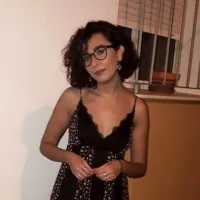
Francisca Hornos Mata is an archaeologist with a long professional history. She leads the Department of Heritage Protection within the Cultural Assets Service of the Culture Delegation of the Andalusian Regional Government in the province of Jaén.
Her work as a heritage manager has covered various types, from archaeological excavations such as those at Plaza de Armas in Puente Tablas (Jaén) or Los Millares (Santa Fe de Mondújar/Gádor, Almería), to the directorship of the Museum of Jaén for over a decade, being the first woman to hold this position.
Currently, she is involved with various organizations and projects such as the University Institute of Iberian Archaeology at the University of Jaén and PastWoman, where she conducts research from a feminist and gender perspective.

- When did you decide to dedicate yourself to archaeology and how was your trajectory until the position you hold now?
It's hard to know when our daily decisions become definitive or at least have a continuity that marks our life. I enrolled in Santo Reino University College in Jaén in 1977, and at age 16, it was very early to make long-term decisions. The only thing clear to me was that I wanted to continue studying. I would have liked to study Journalism but staying in Jaén wasn't possible due to my family's economic situation, so my next option was History because during high school I had a teacher named Isabel Gutiérrez who fascinated me with her knowledge and discourse.
For me, the Prehistory course in Geography and History that Professor Arturo Ruiz taught at the time was a complete discovery. I found myself combining aspects of science with humanities in Archaeology, which combined very well both fields. All this before turning 18 was decisive for me. When my first year ended, I already wanted to be like my secondary school teacher who did an Egyptology thesis or like my Prehistory professor who knew and explained human evolution through known fossils.
After three years at the Jaén campus and two in Granada with a buildup of fieldwork and laboratory experiences under Arturo Ruiz, Manuel Molinos, Fernando Molina, Francisco Contreras, Francisco Carrión, and some experience in French Archaeology/Paleontology through Professor Bonifay via Isidro Toro's contacts, I can say my training was that of someone dedicated to research or teaching.
In those early 1980s, there wasn't the option as now to work managing or overseeing Historical Heritage except in Museums and Archives. My professional history in this field starts with the transfer of Historical Heritage protection competencies from the State to newly created autonomous regions (1984).
In fact, I have the privilege of being part of the first promotion of Conservators of Historical Heritage for the Andalusian Regional Government since 1991 and working as an Archaeologist, Superior Title from 1985 to 1991. My first occupation was exclusively dealing with Archaeological Heritage, handling complaints, instructing sanction procedures, scheduling urgent archaeological activities, and inspecting research projects. After my promotion to Section Head of Cultural Assets (1991), my field of work expanded and I coordinated teams of professionals in Architecture, Art History, and Ethnology. As the song goes, my world broadened. A short but very intense time at the Alhambra Foundation (2002-2003) and 16 years as director of the Jaén Museum (2008-2023), and back to the realm of protection and just in the same position now called Department of Historical Heritage Protection. A 40-year trajectory that felt like 40 minutes.
- Probably this question has been asked many times, but what challenges does the Head of the Department of Historical Heritage Protection face?
It's essential to understand that Andalusian Regional Government Cultural Administration during these years has structured itself through legislative production: The 1991 and 2007 Historical Heritage laws have marked our path, for a long time with strong centralization of decisions in Central Services in Seville and recently with an abundant practice of delegating competencies but very fragmented across various legal dispositions.
The responsibility of protection lies on each Territorial Delegation in the corresponding Service called Cultural Assets Service which has two administrative departments: one for conservation and restoration, and another for protection. This last department handles research and dissemination while the first deals with matters of preservation. Task distribution is the responsibility of the person in charge of the Service in each province, but before and now the challenge is to share common objectives as marked from the Ministry that's now Culture and Sport.
In my most recent performance, I've been here for a year, I have focused mainly on dissemination tasks such as European Archaeology Days (June), General Research Projects Dissemination Days (September) and European Heritage Days (October-December). Another important task is the advisory administration which in our case is the Provincial Historical Heritage Commission that traditionally has helped the Delegation Head to make decisions with support from various sectors.
Working in cultural administration requires teamwork capacity and commitment to knowledge updating. Cultural management is a fascinating world both in private and public spheres. I've always worked in public service and am an ardent defender of the value of the public because it guarantees equality of opportunity. These aren't good times for defending what's public, so it's much more important to explicitly state our role as guarantors of quality and good service to our community.
- Researching your trajectory, we've noticed a preference for the Jienese legacy, is it the "unpolished gem" of Andalusian Heritage?
Although nomadic people are very interesting and often discover and explore unknown territories enriching us all, I have to say that I am quite sedentary, my root with Jaén is deep and profound. My place in the world is this province where I've been formed, expanded, and renewed my knowledge; for managing anything, including Historical Heritage, knowing the territory is a basic requirement. Despite having had excellent opportunities, I always preferred to contribute to improving my city, my province. As for being an "unpolished gem," I'll say it's a matter of opinions but consider that there has been much work done and the shine of the Jienese legacy is undeniable and if you ask me we have a fantastic combination of excellent Natural Heritage and Cultural Heritage. If you ask me, I'd say: how wonderful to still have resources not yet commercialized, not yet overwhelmed by abusive use... in short, that our heritage hasn't been overexploited benefits us much more than it harms.
Of course, everything is a matter of values and options for wealth generation.
- You've participated in numerous archaeological campaigns. How has your perspective on archaeology and heritage conservation evolved throughout your career from your first excavations to your current role in heritage management?
My first participation in an archaeological excavation was during the 79-80 academic year at Cerro Miguelico Torredelcampo, Jaén's Iberian Wall. My entry into field archaeology came through my practical work at Santo Reino University College which assumed a very defined methodology for documenting prehistoric records. In those times, it was crucial to master drawing, precise georeferencing and careful planning with questions to resolve. Unlike other traditions, the importance of prospection and territorial studies was definitive. The theoretical base always stood above the value or aesthetics of objects. I can say that both in Jaén and later in Granada my first excavations aligned closely with New Archaeology, increasingly distant from traditional Antiquarianism. In subsequent years, I worked in various archaeological zones in Castilla La Mancha (Motillas del Azuer and de la Cañas) and Andalusia (Puente Tablas, Cazalilla, Los Millares). The research lines of Jaén University and Granada University on recent prehistory and protohistory are at the base of my training and almost from the start I dealt with coordination, documentation. My fieldwork practice developed very early since nearly my first undergraduate year. As anyone would, I was fascinated by contact with "the earth's archives" because being present in planning and developing an archaeological activity is a very stimulating experience although I can say that after joining Cultural Administration this time reduced but always had a close view of methodological and technological evolution and great respect for work done both by commercial archaeology and research archaeology. In more recent times, within the sphere of museums, it has been passionate working with research teams to set up Temporary Exhibitions (Iberian Women, Marroquíes Bajos Archaeological Zone).
- For over 14 years you led the direction of the Jaén Provincial Museum. What mark have you left on the museum and what mark has the museum left on "Paqui Hornos"?
Truly, it was 16 years of responsibility and learning in the Direction of the Jaén Provincial Museum that felt very short. I sincerely believe that I received much more from this Institution than what I could contribute because when they asked me to compete for this position in February 2008, I had a well-developed administrative career with over 20 years of consolidated public service experience. I always thought they were offering me a prize for my previous performance and that's how I lived it because working at a museum with excellent and diverse collections (fine arts, archaeology, ethnology) in a territory where I've been working since the start of my professional career was very gratifying. That said, institutions are anything but personal projects or put differently, directing a Museum isn't owning anything. In Andalusia's case, Museums are state-owned and autonomously managed. The Jaén Museum is part of the Andalusian Museums network; I mean as a professional you can contribute with your proposals, attitude, and personal baggage to changes in direction but control never lies with the person holding that director position. For me, it was very important being able to celebrate the 40th and 50th anniversaries of this Museum which opened to the public in June 1971 although created by Decree in 1969 merging previous provincial Archaeology (1963) and Fine Arts (1914) museums. Our Museum, Jaén's, has a solid community adherence it serves and without doubt my service there marked me forever. The same happened with the Alhambra; although 20 years have passed since my stay there, when I return I feel like home.
- Being direct, is there a correct way to visit a museum? And how do you visit museums?
A Museum can be visited in many ways but I'll be frank, the typical tourist visit, the must-see tour, the photo for memory and the subsequent bullet hole on the revolver (meaning that you've seen what needed to be seen) doesn't interest me much. A museum offers an organized world to discover in its permanent exhibition and provokes participation with temporary exhibitions but for me museums are meeting places where you can share opinions and reflections with family, friends, colleagues. That's my preferred way of being in a museum sharing space and ideas with those I like most.
Now, let me say that I'm an obsessive solitary visitor to Museums because I love them, they give me serenity, inspire me, and some are part of my personal life. I'd say my favorite places. Additionally, I'm a compulsive buyer from museum shops. You see, contradictory but fundamentally coherent. I believe knowing and living museums has made me a better person and especially connects me to my community in a special way, sharing values and claiming rights.
- Which section of a Museum do you enjoy the most?
In the previous question, I think I already said that I'm a fan of shops. I enjoy this space in museums because I believe objects, books, catalogs say much about a museum and allow conversation and searching for offered items that always remind you of special moments. In any case, my experiences in Reserve Areas in some museums have been spectacular and I wouldn't trade them for anything. Walking through the hidden parts of the Alhambra, Louvre, Prado or Jaén Museum has given me some extraordinary emotions. Also, I've enjoyed immensely Education Spaces seeing children interacting with collections appropriating their past and developing creativity giving me some of my greatest professional joys. Another space is shared with researchers, funds in those labs where experts add value to artworks, cultural material, bone remains etc. Facilitating research work is one of my preferred functions in the museum environment. In short, I enjoy everything; I'm a professional of Historical Heritage Conservation but also someone who enjoys authenticity and artifices that mediate our experiences in a museum.
I forgot another space of great museums that gives me a special experience are restaurants. My last experience at the Royal Collections Gallery in Madrid was magnificent, and I remember another memorable lunch in Washington at the National Art Museum with a Spanish chef's signature. In my case, obligation and devotion blend. I'm very fortunate.
- Regarding PastWoman, not only research but also dissemination work has a significant role. Recently, you gave a talk titled «Ni veneradas, ni temidas. Iguales y respetadas» along with Marga Sánchez. What conclusions did you draw from the encounter?
Allow me to correct that: it's Pastwomen, not PastWoman. It's important because the plural says much about us, women, the feminine singular, this obsession with Woman as an idea, mother, home angel, goddess, witch as stereotype hides the importance of women, those who work day-to-day, those who worked in the past.
In short, on that topic we spoke at Fundación Rodríguez Acosta a few days ago, a sunny Saturday in Granada. It was a Dialogue between Marga Sánchez Romero and me but expanded to all attendees interested in equality and respect values.
Both Marga and I have worked on dissemination through writings and exhibitions and could comment something basic: good dissemination is based on scientific rigor. Feminist archaeology has contributed to a more scientific and complete recovery of past societies.
We talked about a different view of the archaeological record and situated knowledge we need today's women and girls for. Recovering our past, reconstructing genealogies, giving due importance to care and maintenance activities not only does justice to what truly preceded us but facilitates the path to a much more just future society than the current one.
In summary, we could talk about Marga Sánchez's seventh edition book Prehistories of Women and Pastwomen's virtual exhibition Other Views. It was a very pleasant encounter and more are to follow soon there on the Gómez Moreno collection, especially regarding Iberian sanctuary bronzes with Carmen Rueda and other colleagues from Jaén University's Institute of Iberian Archaeology.
- You were the first woman to hold such an important position as Director of the Jaén Provincial Museum. In a profession traditionally dominated by men, have you noticed significant differences in treatment or difficulties related to inequality and machismo? What advances and pending challenges do you identify regarding gender equality in the field of archaeology and cultural heritage management in Spain?
The data is correct on the museum director list if I'm the first, may it not be the last but that's not important. Moreover, the world of museums has an abundant and excellent roster of women. In fact, conservators of museums have been more numerous than male conservators. There's a little "micromachismo" joke referring to this Facultative Body as "the Cuerpa."
In short, for the cause of women, what is desirable is not being news for being first but equality and recognition of those who preceded us. Notice that in Jaén Concha Choclán, current Director of Iberian Museum was Director of Linares Archaeological Museum since 1990, so being a museum director in Jaén isn't as important as remembering we've been doing it since the last century.
Visibility for women in all spheres and in archaeology has been tackled with much tenacity by feminist archaeologists over recent years.
Regarding women and archaeology, this is something we have reflected on a lot from feminism and as a result, we've become aware of many biases.
In my case, I didn't start out feminist but it was at an Archaeological Theory Meeting in Santiago de Compostela in 1992 when I could hear and meet women archaeologists like Marina Picazo, Paloma González Marcen. Laia Colomer, and Sandra Montón. From there on, I started becoming aware of some exclusions, many presentist interpretations singularly masculine. For me, Archaeology has been the path to know a movement that seeks equality between men and women. I believe it's improved my skills as a historian, manager, and made me more empathetic. I owe much of who I am to that meeting in Santiago and all those women who preceded us on this journey. I recommend you see if possible a documentary titled "Off the Archaeological Record" directed by Katya Calmet Valle based on Paloma Zarzuela Gutiérrez's original idea, where stories of invisible women in archaeology and their impact on constructing the past are described. This documentary contains many answers to your interesting questions at this point in the interview.
Awareness of situations of inequality is what makes a feminist perspective useful in reconstructing the past because traditional reconstructions of the past have an androcentric view sold as universal and objective. Deconstructing these false pasts returns us the possibility of a much more equal future.
- And finally, what advice would you give to young (and not so young) people considering developing a career in Archaeology or Heritage Conservation?
I'm not very fond of giving advice unless asked. We tend to simplify the needs of those we advise. In any case, this profession is a team effort and I believe those who choose it should know that being a Conservator of Heritage obligates you to stay updated throughout your career and to know more than just your academic discipline. That is, if you're an archaeologist, you must know art history, architecture, and anthropology. Also, understanding the legal perspective on topics and having the capacity to understand environmental experts' and urban planners' languages are important. This work is fascinating and above all allows us to understand much of what's happening around us; as an optimist I am, I believe it equips us to change unjust situations. I encourage everyone who wants to join this task because truly it's full of satisfactions and there's still so much left to do.
I've loved collaborating with Arqueotimes and here you'll find me for reading your magazine and collaborating as needed.
Interviewed by:
Mª Dolores Rodas Romero
Communication Area


Comments