

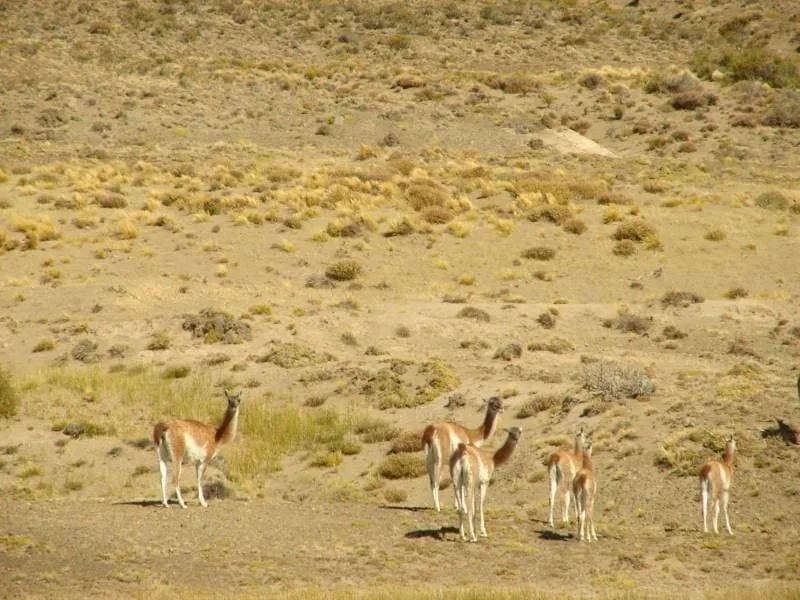
The guanaco (Lama guanicoe) is a native animal of the American continent and present in many provinces of Argentine territory. For many years, it was the main source of diet for Argentina's indigenous peoples since the Paleolithic era. It was the base and protein contribution for hunter-gatherer groups of these lands.
The presence of hunter-gatherers
The first testimonies of human groups in Argentine territory appear in the area of the current Patagonian provinces, in Tierra del Fuego, at sites called Tres Arroyos and Marazzi, while in the central plateau of the Santa Cruz province, we find Cueva de las Manos, Grande del Arroyo Feo, and Cerro Casa de Piedra.

These groups coexisted with megafauna species of the Paleolithic era, now extinct, in Patagonia. These included the mylodon (similar to a sloth), the macrauchenia (long-necked camelid), running birds, and the American horse. In the Buenos Aires region, they found glyptodonts, megatheriums, as well as the previously mentioned mylodon and American horse. These were animals that hunted alongside other species still present today, such as the guanaco, which over time gained more importance.
Once extinct, these Paleolithic era animals, along with the guanaco, included animals like rhea (Rhea americana), deer (Ozotoceros bezoarticus), viscachas (Lagostomus maximus), vicuñas (Lama vicugna), skunks (Mephitidae), armadillos (Dasypodidae), and small rodents (Mandrini, 2023a; Prates, Vitores and Bucci, 2016; Frontini, 2010), depending on the area of Argentine territory. For example, in the northwest region and central Sierras of Córdoba and San Luis, guanaco, rhea, and deer were consumed to a lesser extent, while the Tehuelches in Patagonia consumed the first two.
Also, between 11,000 and 9,500 years ago in Patagonia, stone tools such as points, scrapers, knives were found alongside guanaco and American horse remains (Mandrini, 2023a). Bifacial points are also found with the guanaco as a primary resource in the Limay River basin, dating back to 7,800 years ago. Similarly, in the Tandilia and Ventania regions (current Buenos Aires province), many remains of guanacos and pampas deer were found alongside American horses and megatheriums, dated at the end of the Pleistocene, around 11,000 years ago.
From the late Paleolithic era until the 14th century, the guanaco was the basis of their economy (Prates, Vitores and Bucci, 2016), with a significant presence of the guanaco, for example in San Juan territory (current province of San Juan), it became an essential resource alongside seed collection from algarrobo trees (Mandrini, 2023a). The same happened in Patagonia where it became the main food source (figure 2).
Also, we can observe its consumption in the case of an archaeological site in the current Buenos Aires province where specimens of guanaco, deer, and rhea were found showing evidence of human activity, meaning that processing marks, thermal alteration, and fractures are observed (Frontini, 2010).
Between 7,000 and 5,000 years ago, changes in temperature and humidity made the guanaco the main prey. Even when agriculture began to develop (for example, in San Juan: quinoa, squash, beans, and later corn) and animal domestication started, hunting of guanacos and rheas alongside seed collection from algarrobo trees continued.
Another example is the case of the Comechingones, a community in central Córdoba at the end of the first millennium AD, who consolidated as agricultural-village dwellers with an economy based on crops (corn, beans, squash, and quinoa), but continued hunting guanacos, hares, deer, and collecting algarrobo and chañar seeds (Mandrini, 2023a).
Additionally, in the Pampas region (current provinces of Buenos Aires, southern Córdoba, and San Luis), the guanaco was the main resource until its arrival with Europeans led to their extinction.
The utilization of the guanaco
The guanaco was used entirely, its meat and entrails were consumed as food, but also its hide, tendons, and bones served as raw material for making tools.
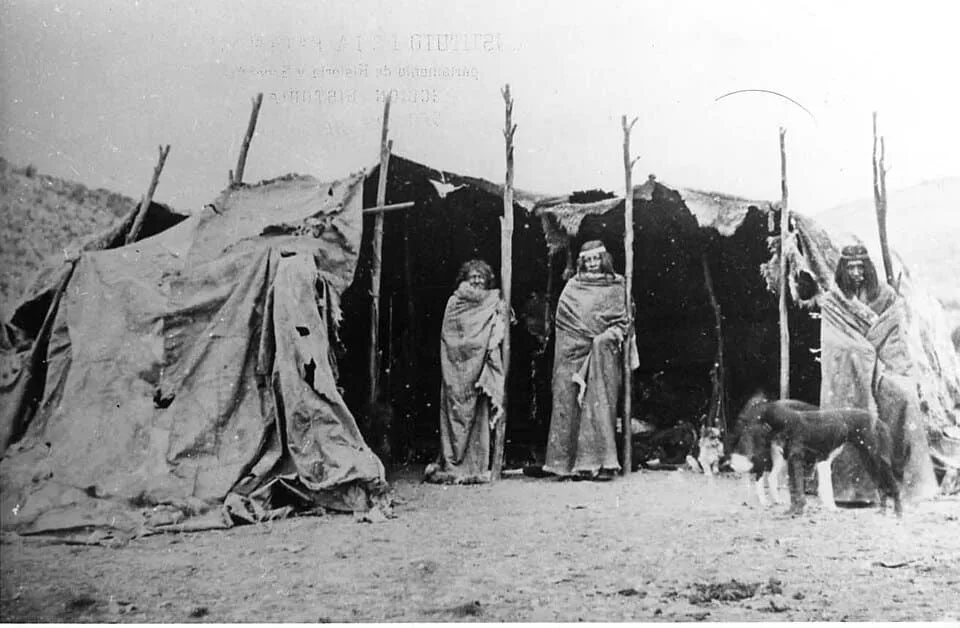
Specifically, its hide was used to make clothing, shoes, bags, and sacks for transporting salt, water or other elements. Also, the outer covering of tents was made from the skin of adult guanacos and mantles (quillangos) (figure 3).
With the veins and hide of the neck and back, straps were made, while tendons were used to make bowstrings and sewing threads for clothing (Prates, Vitores and Bucci, 2016). Even the long bones were employed in making pointed tools, as seen at Intihuasi in the Sierras Chicas of Córdoba, where baskets, awls or retouchers were made. (Madrini, 2023a).
In Patagonia, they were consumed in different ways. One method was drying the meat. This preparation is known as «charqui». Other methods included roasting on stones or over fire, in stews, and even, as mentioned earlier, it was consumed raw (Prates, Vitores and Bucci, 2016).
Currently, the consumption of guanaco has not disappeared but continues in certain areas of Patagonia to a lesser extent. The arrival of cattle displaced other animals from their diets. Its meat is low in cholesterol and fat with high protein content, iron, zinc, and vitamin B12, as well as flavorful, used for various dishes (Regional Gastronomy Argentina, 2016; Sabores Santacruceños).
Conclusion
In summary, the guanaco was an animal hunted for consumption by hunter-gatherer groups in Argentine territory, and during the Paleolithic era coexisted with species now extinct. After 11,000 to 10,000 years ago, with the disappearance of these species, it became a primary resource for many communities.
Furthermore, it was an animal that was extremely utilized not only for its meat, which was an important protein source in their diet but also for every part of its body used to make everything from their homes to hunting tools like bowstrings. It remains one of the species still present in Patagonia although since the arrival of cattle, it has lost its place as a staple food.
Bibliography
Regional Gastronomy Argentina (2016). Federación Empresaria Hotelera Gastronómica de la República Argentina.
Frontini, R. (2010). «Las arqueofaunas en la cocina: actividades culinarias en el sitio 2 de la localidad arqueológica El Guanaco». Arqueología, 46, 191-208.
Lobato, M. Z. and Suriano, J. (2000). Atlas Histórico de la Argentina. Editorial Sudamericana.
Mandrini, R. (2023a). La Argentina aborigen. De los primeros pobladores a 1910. Siglo Veintiuno Editores.
Mandrini, R. (2023b). «Tiempos prehistóricos». In P. Yankelevich (Ed.) Historia Mínima Argentina. Prometeo Editorial, El Colegio de México, 23-66.
Prates, L., Vitores, M. and Bucci, P. (2016). «La cocina indígena en la Patagonia continental». Desde la Patagonia difundiendo saberes, 13(22), 16-22.
Sabores santacruceños. Recetas de nuestra tierra (s.f.). Ministerio de producción, comercio e industria.


.jpg)

Comments