
The identity of a file and the concept of archival science, as well as their functions are currently topics that generate controversy due to the permeability of information. Authors of manuals, publications in the form of treaties, and articles have sought to bring readers closer to two interrelated fields while also taking the opportunity to dispel confusions and establish theoretical bases that clarify matters. However, an inexperienced researcher, historian, or art historian may find basic knowledge about files and archival science in this abundance of principles but they do not show the pragmatic reality with fluency. The purpose of this article is to briefly address the beginnings and distinction of these two dependent competencies as well as to propose the positive aspects of archives and the insurmountable limits.
The beginning of writing marked the need to safeguard documents generated for legal purposes. In Ancient Greece, the arkhé, whose translation in Greek is archeion, was the term used to refer to the place of storage, conservation, and drafting of texts under the charge of a specific person; however, in Rome, the deposit of the archeion introduced documents of another nature: administrative and religious (Cruz Mundet, 2023, p. 17; Díaz Rodríguez, 2009, p. 46).
From then on, during the early Middle Ages, archives would fall into a marked decline caused by the fall of the Roman Empire and the significant prominence of Germanic law over Roman administration. In this situation, the document control of the Church and the important role of royal chanceries acted as a breeding ground in the recovery of the legal use of documents and in the formulation of the foundations of archival science (Granel Peiró, 2016, pp. 15-16).
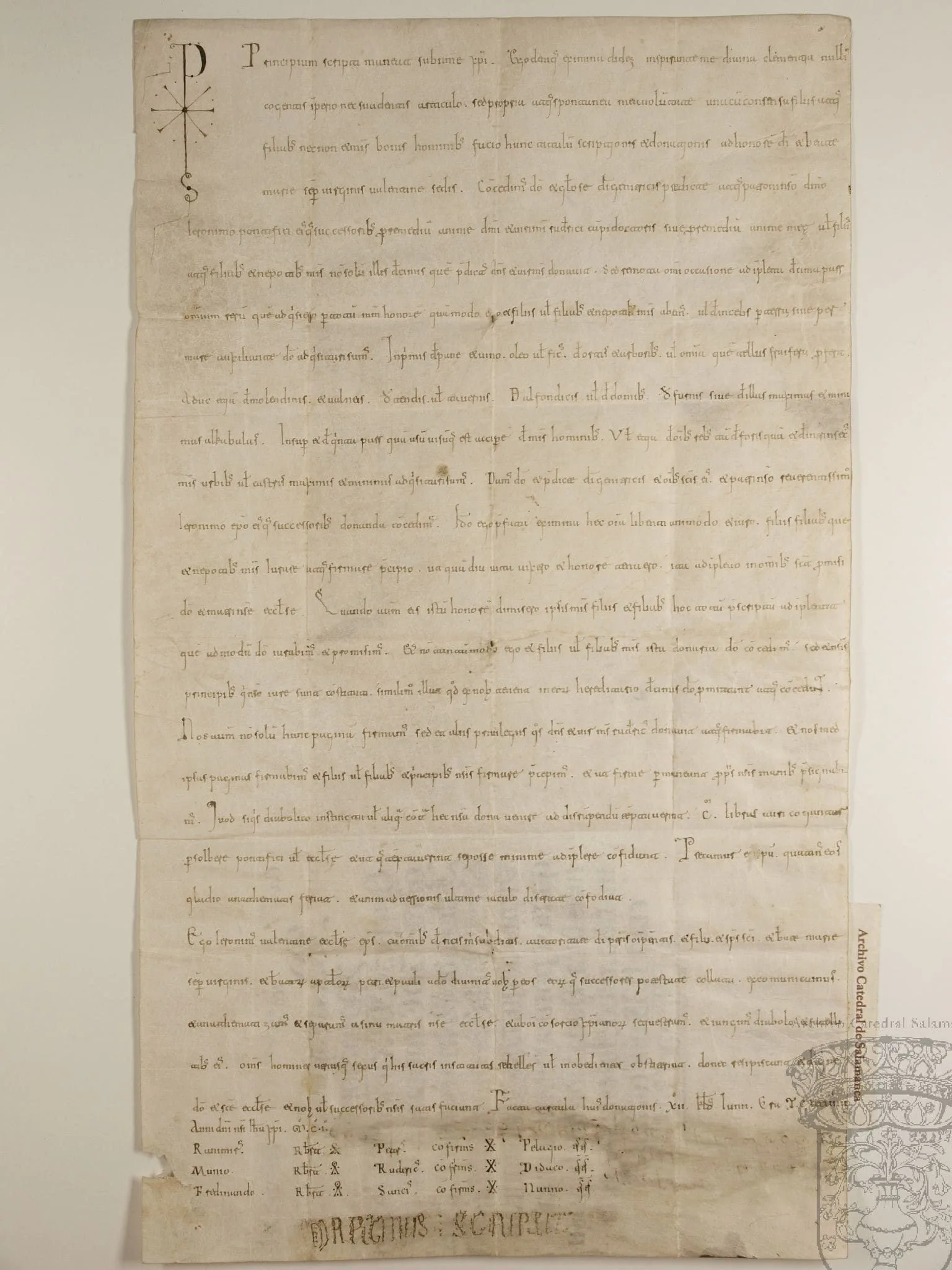
The religious body aware of the importance of document conservation for heritage assets turned cathedrals, monasteries and convents into prominent custodial sites -besides their own religious holdings- of a corpus of administrative, economic, and legal documents linked to royalty, the noble stratum, and merchants. This situation triggered new functions that would define the first steps of archival science: the ability to classify and organize documents according to the corresponding theme creating per se documentary funds, inventories, and catalogs (Cruz Mundet, 2023, p. 19; Escobar Escobar, 1962, p., 443; Granel Peiró, 2016, pp. 16). The eloquent function of archival science suggests the creation of a compilation of norms that regulated the organization of royal orders and ecclesiastical texts.
To this must be added that the intrinsic evolution of these storage centers, society, and economy promoted the decline of parchment with the presence of paper and the substitution of Latin by vernacular languages (Granel Peiró, 2016, p. 16).
According to the chronology proposed by Rober H. Buatier, in the Modern Age archives were inscribed within the absolutist power of the monarch, developing consequently the «state archives», deposits where documents produced by the administration of the Spanish monarchy and controlled by royal power accumulated. The flourishing of this type of documentary funds emerged in 1545 when Charles I ordered to concentrate all documents at the castle of Simancas, subsequently becoming the Archivo de Simancas, and continued its proliferation in the eighteenth century with the subsequent creation of the Archivo General de las Indias in Seville founded by Charles III (Alberch i Fugueras, 2002, p. 27; Granel Peiró, 2016, p. 19).
The rules established for the structuring of funds were at the same time, the calling card on the situation of archival science of the era: an independent discipline consecrated among treaties and theoretical-practical manuals later considered as the threshold of a nascent «scientific specialty». A clarifying moment that serves us as a reference point to scrutinize what happened in the nineteenth century.
The circular of 1841 by archivist Natalis de Waily and the publication of the Dutch S. Muller, J.A Feith, and R. Froin in 1898 would be crucial for finally establishing archival science as a science (Cruz Mundet, 2023, p. 18; Díaz Rodríguez, 2009, pp. 49-51).
In turn, what is an archive and what is archival science? Essentially, the archive is considered as the place of deposit for documents of various conditions. The archival science encompasses the theoretical framework (methodology, norms, terminology, principles) and the practical framework (techniques and procedures for conservation, organization, and dissemination of documents) corresponding to the functioning of archives, also employing other auxiliary scientific lines such as: paleography, linguistics, information technologies, and diplomacy. Additionally, those in charge of the Archive and Archival Science are archivists (Alberch i Fugueras, 2002, p. 19; Heredia Herrera, 2007, pp. 43-48).
Following the deployment of public and private archives, a substantial mass of documentation is concentrated, which as we have been able to observe in the historiographic journey is endless but outdated. The approach to the document allows us to idealize its relevance by the multiple possible readings according to who interprets them. However, at times we simply do not have the opportunity to attend to it due to various vicissitudes, which projects a series of conditions and allows us to value what it offers. In the following lines, a brief approach will be made to some studies -framed in the artistic field- that can be developed thanks to document consultation in archives, as well as certain difficulties we may encounter at the beginning or during the development of research.
Potentialities
- Reconstructing the past through documentary filtration (contracts for work, letters, wills, deeds, notarial and religious documents) and visual (photographs, building plans).
- Finding lost or decontextualized works of art whose main cause would have been the Mendizábal Desamortization.
- Knowing the substrate of artistic-patrimonial objects in a place and elaborating the corresponding catalog.
- Studying inventories to revalue cult objects belonging to a monarchical and noble fabric.
- Understanding the economic functioning of an institution, understanding the purchase-sale procedure and even discovering which social stratum was the largest buyer.
- Locating an artist temporally and geographically through the collection and study of invoices.
- Embarking on curatorial projects in the exhibition field
- Attending scientifically to pieces before they are acquired by a Museum
- In conservation and restoration, knowing the artist and their tools of work.
- In the art market, conducting an exhaustive analysis and study for detailed dating prior to proceeding.
Limitations and barriers to access content
- Document dispersion, loss, and elimination due to transfers or human factors.
- Theft of documentation.
- Limited access to original documents and inventories.
- Limited access in private archives.
- Deterioration of the material (insects, humidity, or lack of pagination), that is, conservation of the object to be consulted.
- Nonexistent database or difficult-to-search database.
- The obsolescence of the database or consultation website.
- Cumulative and subsequent lack of registration due to time scarcity or personnel shortage.
- The archive's schedule as well as the number of consultation requests.
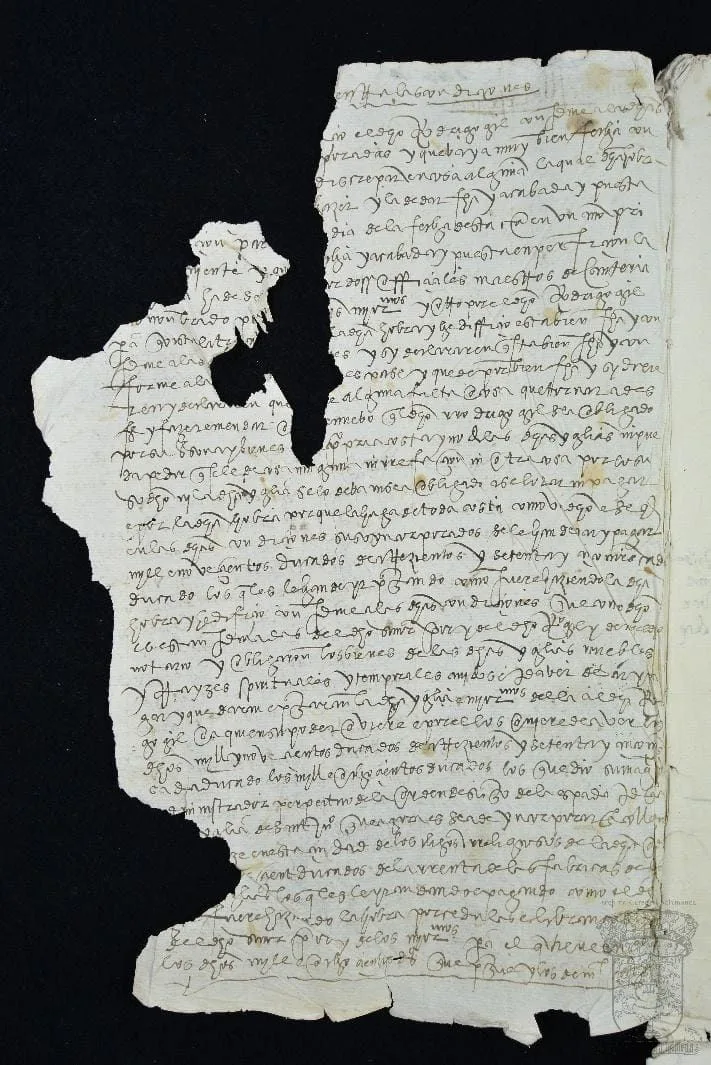
- Linguistic and paleographic limitations (especially in Latin) for novice researchers
- Latin writings. The lack of Latin studies hinders reading documents written in this language, which causes a significant loss of potentially relevant information.
Conclusions
As a conclusion, appreciating the task of storing, conserving, and organizing documentation is not a trivial matter. Thanks to the work of archivists and conservators, among others, today it is possible to carry out meticulous research, in addition to considering archives as bridges connecting past and present. Currently, an expedited mediation through advances in document digitization and creation of databases for consultation that facilitate search and access such as PARES, the National Library of Spain or the Institutional Repository.
Bibliography
Alberchi Fugueras, R. (2002). Els arxius, entre la memoria histórica i la societat del coneixement, Editorial UOC.
Cruz Mundet, J.R. (2023). Archivística. Gestión de documentos y administración de archivos.Alianza Editorial.
Díaz Rodríguez, M.R (2009). Archives and Archival Science through History. Bibliotecas. Anales of Research. 5, 45-52.
Escobar Escobar, H. (1962). Cultural Sanctuaries. Origin and history of archives. Cultural Bulletin and Bibliographic. 5 (4), 440-447.
Granel Peiró, Á. (2016). Document Depositories: History of Archives and Archival Science [Graduation Thesis, University of Zaragoza]. https://zaguan.unizar.es/record/58868
Heredia Herrera, A. (2007). What is an Archive?. Ediciones Trea
Websites
National Library of Spain (1996). Welcome. https://www.bne.es/es
Bank of Spain. (s.f). Institutional Repository. https://repositorio.bde.es/
PARES Repository. (s.f) Welcome. https://pares.cultura.gob.es/inicio.html


Comments