

- Introduction
The relationship between Geology and Archaeology has been developing since the 19th century with publications of various works such as Principles of Geology (1830) and Geological Evidences of the Antiquity of Man (1863) by Charles Lyell. This British geologist begins his research by discovering different extinct animals and stone tools both in caves and on river terraces, leading to the first archaeological stratigraphic interpretations.
From its inception, Geoarchaeology aims at understanding the environment and its relationship with humans and women in the past. It is from this perspective that archaeological sites are observed from other viewpoints, as besides the way of life of our ancestors, there is an interest in knowing their environment and adapting to it. If we were to define the objectives of this discipline they would be:
1- Knowledge about the formation of the archaeological site itself and its stratigraphic levels.
2- The connection between humans and their immediate environment, as well as the exploitation of abiotic resources.
3- Interpretation of cultural variations through paleoenvironmental change.
- Origin of the Discipline in Spain
In Spain, interest in Geology and Prehistory emerged simultaneously in the mid-19th century, with pioneers being a series of university academics from various disciplines such as Luis Siret and Cels and his brother Enrique Siret Cels, who discovered Los Millares, El Algar, and Villaricos among others. Additionally, we not only have discoveries related to Prehistory but also, thanks to Eduardo Saavedra y Moragas, a Roman road between Burgos and Zaragoza was found, followed by the city of Numancia (Ramírez-Amador et al., 2021).
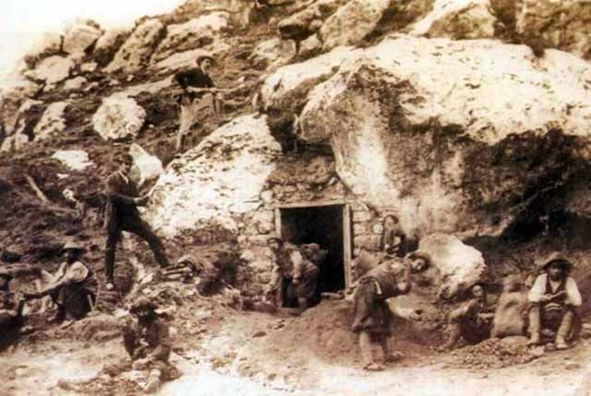
Throughout the 19th century and early 20th century, these disciplines continued to make advances in understanding the natural environment and its relationship with humans. By the 1970s of the past century, research began not only on the environment but also on the formation of archaeological sites themselves, conducting sediment analyses.
- Techniques that Form Part of Geoarchaeology
Researchers like Pollard consider this science to be the application of geological sciences for solving questions related to archaeology. In words of Benito-Calvo et al., (2014), "it is the study that is carried out to analyze the abiotic components of the natural environment, among which were the resources available to past societies, as well as the creation of the site itself and its archaeological record." Thus, when referring to the discipline of Geoarchaeology, we not only speak about the physical environment of a specific area but also about understanding and researching stratigraphy, sedimentology, and geomorphology.
We aim to answer the following question: What techniques do geoarchaeologists use in their research? There are several techniques: archaeological, geological, physical, and chemical. Among these and some auxiliary ones, we achieve understanding of deposit formation and its relationship with the anthropization of a specific area.
3.1. Soil Micromorphology
A good example within micromorphological study is led by Carolina Mallol on soils from Middle Paleolithic sites where she identifies, through micro-excavation, certain soils and even combustion structures. This research team carries out thin sediment slices to interpret the formation processes of the archaeological zone and its habitability.

3.2. Physical-Chemical Techniques
Can we know the degree of occupation of a cave? The research team led by Cesar Borja recently conducted a study in the Cave of Eight (Cazalla de la Sierra, Seville) where they obtained parameters such as carbonate, organic matter by ignition, pH, porosity and texture of stratigraphic units. They interpreted that markers like organic matter by ignition or magnetic susceptibility are related to human occupation of the cave in the past, with certain parameters increasing (organic matter by ignition, pH, and porosity) when there is anthropogenic activity while carbonate decreases. Consequently, when the cave is not occupied, the opposite occurs (Borja et al., 2021).
3.3. DNA Retrieval?
Can we know who inhabited a site through sediment? Research in Geoarchaeology has allowed the recovery of DNA from hominids from the sediment of archaeological sites. Researchers from the Max Planck Institute for Evolutionary Anthropology, along with several scientific institutions, have been able to recover biomolecules from animals and humans from the past and carry out genetic analyses. From this starting point, it is possible to determine DNA sequences opening up a field of study yet to be discovered (Massilani et al., 2022).
We can conclude that Geoarchaeology has continued evolving from the last decades until today, becoming the intersection of disciplines that enables broader studies on the past. This helps us understand how our past was, how we have evolved biologically and culturally, and how to understand the relationship between the current natural and artificial environment through its transformation over time.
Bibliography
Benito-Calvo, A., Campaña Lozano, I., and Karampaglidis, T. (2014). Basic concepts and methods in geoarchaeology: geomorphology, stratigraphy, and sedimentology. Treballs d’Arqueologia, 20, 41.
Borja, C., Caro, J., Álvarez, G., Díaz, F., Recio, J.M., Martínez, A., Gavilán, B., Pajuelo, A., and Garrido, J.M. (2021). The Early Neolithic in Sierra Morena. Geoarchaeological analysis of an occupation deposit in the Cave of Eight (Cazalla de la Sierra, Seville, Southwestern Spain). Cuaternario y geomorfología: Revista de la Sociedad Española de Geomorfología y Asociación Española para el Estudio del Cuaternario, 35 (3-4), 87-119.
Gómez, D., Mallol, C., Galván, B., and Hernández, C.M. (2010). A general geoarchaeological view of the Musterian site of El Salt (Alcoy, Alicante) based on micromorphology. Recerques del Museu d’Alcoi, 19, 19-32.
Massilani, D., Morley, M.W., Mentzer, S.M., Aldeias, V., Vernot, B., Miller, C., Stahlschmidt, M., Kozlikin, M.B., Shunkov, M.V., Derevianko, A.P., Conard, N.J., Wurz, S., Henshilwood, C.S., Vasquez, J., Essel, E., Nagel, S., Richter, J., Nickel, B., Roberts, R.G., Pääbo, S., Slon, V., Goldberg, P., and Meyer, M. (2022). Microstratigraphic preservation of ancient faunal and hominin DNA in Pleistocene cave sediments. Proceedings of the National Academy of Sciences of the USA, 119 (1), 1-10.
Ramírez-Amador, J.L., Domínguez-Bella, S., and Muñoz, A.M. (2021). The beginnings of geosciences in Spanish archaeology. Revista Atlántica-Mediterránea de Prehistoria y Arqueología Social, 23, 33-42.


Comments