
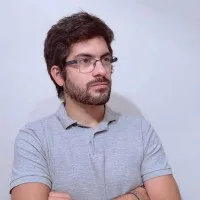
Today we have the pleasure of speaking with Pablo Garrido González, a distinguished archaeologist and heritage conservator with a notable career at the Junta de Andalucía. Specialized in landscape archaeology, Garrido has built a solid career supported by a European Doctorate in History and Archaeology from the University of Seville.
Since December 2018, he has served as conservator at the Junta de Andalucía after leading significant projects as director at Atlas Arqueología y Patrimonio. Among his most relevant contributions are his participation in major research initiatives such as "The Portus Project," "Los paisajes del Guadiamar," and "Smart Architectural and Archaeological Heritage," endeavors that aim to merge heritage preservation with tourism and sustainability.
Throughout his career, Pablo Garrido has been the recipient of multiple accolades, including the prestigious II National History Prize in 2004. Additionally, he has maintained a strong connection with academia, having been a pre-doctoral researcher and fellow at the University of Seville, where he combined teaching with his passion for research.
- As a heritage conservator at the Junta de Andalucía, what are the biggest challenges you face in preserving Andalusian heritage?
I am very critical about this. The challenges are many (lack of resources, climate change, mass tourism...), I don't know if too many to list here. But I can summarize them in a single problem, as the root cause of almost all the problems we face is the lack of real awareness and sensitivity from our political class towards the immense cultural heritage that we have and are responsible for managing. I am not referring so much to those within the field who exercise their functions at what is now the Department of Culture and Sports, which in fact are very sensitive because they know our reality, but rather to those who ultimately release the human and financial resources needed to ensure effective guardianship of heritage assets. Let me explain: if the Treasury does not transfer the required funds, nor does Personnel create or equip the necessary positions, it is because our political representatives do not fight for them when budgets are being drafted or amended in Parliament. I also don't see an opposition that is effectively focused on these issues. But here's where I go: this isn't the fault of politicians, which would be easy to blame. The fault lies with society. Why? Because everyone wants to have the best museums and for archaeological sites to be in perfect condition when they visit them, but at crunch time almost no one truly fights for it. Society's priorities are largely elsewhere, and the political class, contrary to what is always said, faithfully reflects society. If more isn't invested in heritage, it's because there isn't true political will, which could provide means to reverse the situation; but that will comes from society. The public may be offended by this, but social reality is different, and most people have their concerns, undoubtedly legitimate, elsewhere than our museums or archaeological sites. With this, I don't mean to say that technical staff in administration are perfect and infallible, but at least we try to do the best possible with the means available.
- With your experience in landscape archaeology, what importance does this discipline have in understanding and preserving cultural heritage?
When we began to overcome the monumentalism that came from the antiquarian tradition, it was mainly because we finally understood the importance of context. Context can refer to a stratigraphic unit, a visual environment, or a complete cultural landscape, at various scales. Although this has taken longer, it is eventually reflected in successive documents (charts and conventions) signed by our country and incorporated into legislation. But we are late. First, because the renewal of our legislative bodies is slow and most texts are outdated. Second, due to the lack of means to implement them (and socially prefer a theme park, even if historical, over a cultural park). The landscape itself is an element of history, something we have known for some time now, but we continue to protect individual elements, at best with a somewhat wider environment. Meanwhile, in the name of progress and clean energy, there's massive speculation with solar plants (and to a lesser extent wind turbines) that are paving the fields and destroying our surroundings in their most significant aspect: the cognitive and perceptual part of our landscape. I take consolation in the bitter fact that this is a historical dynamic affecting cultural landscapes, though it sweeps away other more sustainable formulas.

- You have participated in several research projects. Which one do you consider to be the most significant for your career and why?
I recall with special fondness two, both in Andalusia: one called "Los Paisajes del Guadiamar" (Seville), led by Fernando Amores and Enrique García Vargas from the University of Seville as principal investigators, and another on prehistoric mining between the provinces of Seville, Córdoba, and Huelva, led by the university of Tübingen (Germany). Both were crucial for me to understand mining as one of the main factors transforming landscapes, from the Late Prehistory to today. Additionally, they consolidated a group of friends and colleagues who have been united for many years and have been highly productive. When what is academic, professional, and personal are well aligned, it results in greater satisfaction and productivity. I speak of personal satisfaction and the joy of working on something you love with people whose camaraderie is total.
- How do you believe new technologies are transforming the field of archaeology and heritage conservation?
New technologies have made our lives easier, especially in documentation. I think we document better now, faster and with greater precision. It benefits conservation directly through two avenues: non-invasive techniques mean a lower degree of impact if direct intervention is not necessary or can be done as lightly, precisely, and surgically as possible; secondly, heritage that is at risk or disappearing can be preserved even in digital form. This digital twin can later serve for multiple purposes, from recreating something nonexistent to serving as an alternative to not exposing the original.
- What role does scientific dissemination play in your work and how do you believe communication between archaeologists and the general public could be improved?
I will also be very critical here, almost going against the current. Since I started studying my degree in 1999 until today, I have never stopped hearing archaeologists - university or otherwise - reflecting aloud and constantly on the need to communicate what we do and what results we provide to society because it is an intrinsic part of our work's purpose. Always from a deep self-critique. Since then, I couldn't say how much effort we've put into various activities and publications aimed at disseminating our work as widely as possible, from specialized forums and educational programs to conferences and publications for the general public, including open days at excavations and sites. From the responsibility I now hold, I can assure that a significant portion of the annual investment in our museums and cultural spaces (sites and ensembles) goes towards dissemination activities aimed at the general public, such as educational programs for schoolchildren, family workshops, lecture series, guided tours, and thematic visits of all kinds. Direct investment far above what is allocated to conservation (though it's true that most of this comes from other centers), which in 2024 translated into over a thousand free public dissemination activities at museums and ensembles managed by the Department of Culture. With this, I want to say that the social commitment to dissemination among heritage professionals, archaeologists included, both public and private agents, is total and active.
When I said earlier that I would be very critical about this, however, it's because we've reached a point where more is still demanded of us, as if we were living in the ivory tower of academia, to disseminate even more... no, what really happens is that we are being asked, consciously or unconsciously, to lower our standards further. Not adapt them, as we always do, to age groups, educational levels, or socio-economic profiles, but to lower them to the poor cultural level that exists in Spain and other European countries. We need to rebel against this, the educational decline is noticeable and palpable, the average cultural level - I stress, the average - is going downhill without brakes, and someone needs to speak up: lowering standards further isn't better dissemination; it's impoverishing and dumbing down society even more. Bad times when mere opinion is better regarded than knowledge, and ignorance is increasingly venerated and even glorified. Dissemination must counteract this by raising the level while ensuring comprehension for all audiences.
- What are the biggest challenges facing urban archaeology in historic cities like Seville?
Urban Archaeology is one of the disciplines that has contributed and continues to contribute most to our understanding of our cities. The technical and academic level is high, and generally, professionals in this field do an excellent job under very adverse conditions.
There is a challenge of conservation and physical and cognitive accessibility. While understanding the legitimate interests of developers, both private and public, it's true that administrations generally act as mere liberators of land. Information is recovered with quality, and when authorization to dismantle remains is granted, it is usually reasonable for multiple reasons of conservation, accessibility, opportunity, and public interest. What isn't reasonable is that in the few cases where preservation is fully justified based on the principle that archaeological heritage constitutes a limitation to urban development, these measures are not always adopted as bravely or truly pertinent. The result is a trend towards conserving little, under dubious conditions or practically unviable, or worse yet, the abuse of relocation to unknown places, where remains are left abandoned to their fate, sometimes literally parked in a park, and more importantly, totally decontextualized and incomprehensible for passersby. And then we're asked to continue lowering our standards so that everyone can understand...
No, it's not as difficult to reconcile public interests with private ones, especially if well-founded and, this is key, if clear communication takes place from the outset so that private agents know what they are getting into and can adjust their actions accordingly.
- What advice would you give to young people considering a career in archaeology or heritage conservation?
For once, I will be brief. Encourage them to do it, to study what they want. Life is just as hard for those who study as for those who don't, almost equally so whether one studies archaeology or another field. If they like it, try it and if it still suits them, let them continue. Nothing brings more happiness than working on something you love, even when the work is tough and not necessarily the most important thing in life. But it occupies a large part of your life.


Comments