
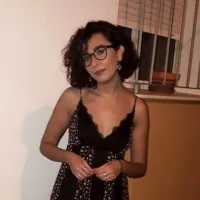
Yanira Franco Adán is a graduate in Art History (Complutense University of Madrid), cultural heritage manager, specialized in communication and promotion of heritage thanks to the Master's degree Cultural Heritage in the 21st Century: Management and Research (Complutense University and Polytechnic University of Madrid) and expert in Applied Technologies for Cultural Heritage (UNED).
With the idea of bringing culture to everyone, in 2016 she opened her profile "Yanirarte" on social media, through which she discusses various topics with simple language and touches of humor, but always sharing a common thread: art and history.
Furthermore, professionally, she has been able to be part of institutions such as the Museo Nacional Thyssen-Bornemisza in Madrid, in the Marketing department, and continues to collaborate currently as an expert on the LabThyssen project; and Patrimonio Nacional, within its Communication team.

- When did you decide to dedicate yourself to the Humanities? Why specifically to cultural dissemination?
It was exactly ten years ago when I was preparing for my final exams. Throughout my adolescence, I had been clear that I wanted to be a doctor, but sometimes last-minute decisions turn out to be the best.
It's true that I grew up in an environment quite "cultural," so when I decided to study Art History instead of Medicine because during my second year of high school I enjoyed Spanish history more than Chemistry or Biology, it only surprised me a bit.
Obviously, this was such a big change that I spent the entire summer wondering if I had made the right choice in choosing that degree since I hadn't even taken that subject before. Needless to say, all those doubts vanished as soon as I started my classes. There's nothing I like more than being talked about history and art.
- How did the "Yanirarte" project come about? What is your source of inspiration? For several years, you have been closely linked to the Fundación Colección Thyssen-Bornemisza. How is it working for an institution of such renown?
My beginnings in cultural dissemination go hand-in-hand with my first year at university. At that time, I was a big consumer of YouTube, so there were times when I would look for videos to better understand what I saw in class, but all I found were very old documentaries. The fact that no one spoke about culture in an approachable and simple way, as they did in other areas, surprised me.
I remember thinking about this for months until I finally took the step. If I didn't know anyone who was doing it, why couldn't I do it myself? And so, in April 2016, I uploaded my first video as "Yanirarte." To be honest, that introductory video still makes me a bit embarrassed today since I was only eighteen and not used to being on camera, but at the same time, it gives me a sense of nostalgia seeing how brave I was back then and how much I've changed since.
As for my sources of inspiration, initially they were accounts that had nothing to do with art. Over time, there began to be more content creators like Ter, whose videos accompanied me during the last years of university, and Judith Tiral is still my favorite today.
- We are aware of your impact among young lovers of cultural knowledge, what reflection do you make about this?
When someone tells me "I've decided to study Art History thanks to you," I get emotional and feel a tremendous sense of responsibility. The Arts and Humanities have been undervalued for years, and it's not an easy path, but being part of the new generation still having interest in knowing about the past and present is very gratifying.
I believe that treating history and art from a close and entertaining perspective, while maintaining rigor, has shown young people that it might not be as boring as they thought.
- Following the previous question, does the non-specialized public have a thirst for knowledge?
Absolutely! Curiosity is intrinsic to people regardless of their studies. Additionally, I often mix cultural topics with my other passion, traveling, which many people do as well. There's nothing better than getting to know different places and understanding why they are the way they are or what you're seeing there. It's also true that on Instagram, my audience is mostly made up of aspiring professionals and those in the cultural sector, but not so much on TikTok, which I believe is a perfect balance. The conversations I have with them are very enriching, and sometimes they ask me questions I hadn't even thought about myself. As Goya said: "I still learn."
- What role do cultural professionals play in society? Should cultural managers also be cultural educators? How far does our professional ethics extend?

Cultural management is a broad field that goes beyond education. As an art historian and cultural heritage manager, I believe there's much misunderstanding about the jobs one can do or even where we can be present. It hasn't been few times when people have asked me if I was working as a guide at the museum or palace, not negatively but rather because they didn't know there were other roles beyond that. In my master’s program, I specialized in social use, interpretation and dissemination; others focused on research, territorial planning, economics, tourism, project development... This field is incredibly broad! My professional life has been centered around cultural institutions and the areas of Communication and Marketing, but there are cultural managers in universities, city councils, associations, radio stations… Regardless of where you are, it's essential to always keep in mind the importance of conserving and valuing Cultural Heritage.
- Unfortunately, we face many difficulties at a professional level as cultural professionals. What obstacles have you encountered throughout your career?
Here I'm going to be quite repressive and say that the phrase "working for love of art" seems to have deeply ingrained in collective subconsciousness. If I had to define the professional landscape with one word, it would be "precarious," just look at job offers related to culture (and many other sectors, unfortunately). Volunteering, subcontracts, abusive schedules working seven days a week from morning till night, and laughably low salaries are our daily bread in the cultural world. There have been times when you wonder if studying Humanities was really worth it, whether your situation will ever change or even if you're truly good at what you do. And I'm not just talking about myself but my colleagues in the sector as well. Everyone praises Spain's marvelous cultural heritage, which is true, but what about those of us who give our all day after day to preserve, protect, and promote it? It’s shameful how little we are valued.
- And finally, what advice would you give someone who wants to dedicate themselves to the world of dissemination, particularly cultural and artistic?
If someone wanted to get into dissemination, I'd tell them to do it because they genuinely love it and feel passionate about what they want to share, as it can be very frustrating. It's an area within social media that has a different rhythm and where you depend on the infamous algorithm.

There are times when you spend days researching a topic and that publication doesn't reach the audience you want it to, while other times you make a less elaborate video and it goes viral. I think it's crucial to always be clear about why you do what you do and remember that numbers don't reflect your professionalism or worth. If I had to choose one piece of advice, it would be that every video should have solid research as its foundation. Without all the sources I consult for my videos, I wouldn’t be anything. It’s important to include references if someone is interested in learning more. Citing sources is also a way to highlight the work researchers do.
You can find more information about Yanira through her profiles and projects:
LinkedIn: Yanira Franco
Instagram: @yanirarte
Twitter (X): @yani_yani3
Other: YouTube @Yanirarte
Interviewed by:
Azahara Cañamero Gómez
Arqueotimes Team
Mª Dolores Rodas Romero
Communication Department


Comments