
This article analyzes the importance of street names as a reflection of collective memory regarding historical figures and events. Although they may go unnoticed, many streets have names related to past events, selected according to a discourse supported by the power of each moment. Therefore, there is no doubt that streets are an unconscious contact point for citizens with history. Similarly, this forms part of the historical propaganda that, with greater or lesser intention, is imposed by rulers at any given time.
In recent decades, interest in urban nomenclature has evolved significantly, and it has shifted from existing solely in compilations of narratives justifying their names to more critical studies, which seek to analyze the reasons behind these names, what message they convey (whether positive or negative) and how they can be used for education and dissemination. Therefore, it is deemed necessary to write this article and promote awareness of its importance and some related work to encourage research in this field.
Interest in street names: the example of Madrid
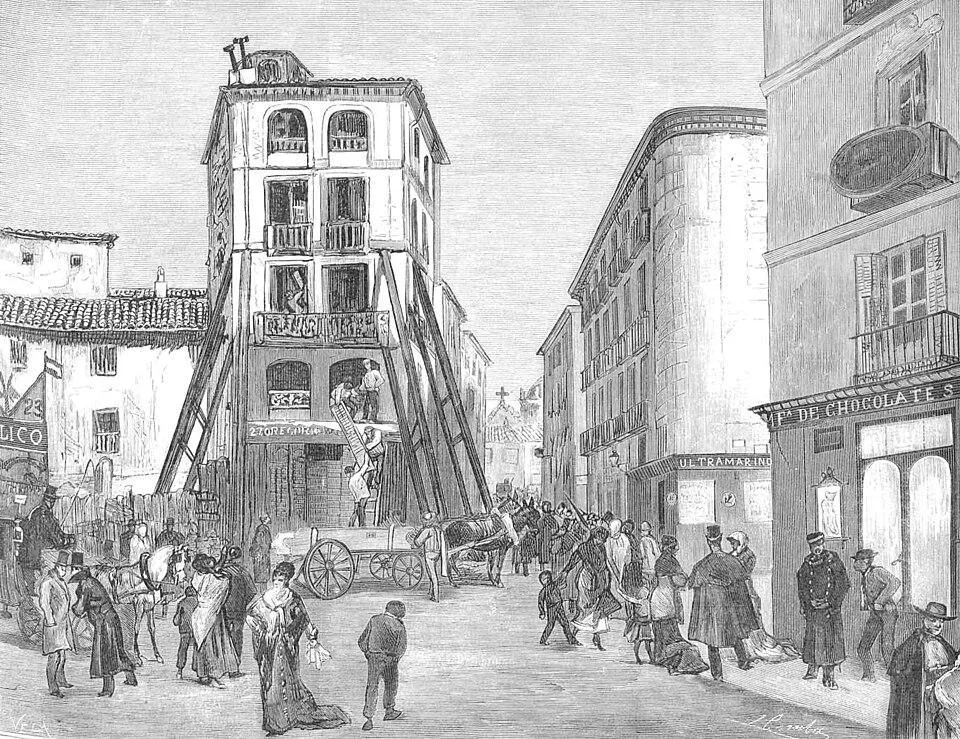
In the 19th century, interest arose regarding the origin of urban nomenclature, as several works related to Madrid's street names have been found. In older books and dictionaries, only the names of streets and mythical or historical events that justified these names are recorded. Among them, Mesonero Romanos (1861), Capmany y Montplalau (1863) and Peñasco de la Puente y Cambronero (1889) stand out. In these works, the thoughts that led to the naming of these streets are not analyzed; in other words, it is unclear under what criteria a particular history was chosen to be remembered on a street. This same trend continued into relatively recent times with Bravo Morata (1984).
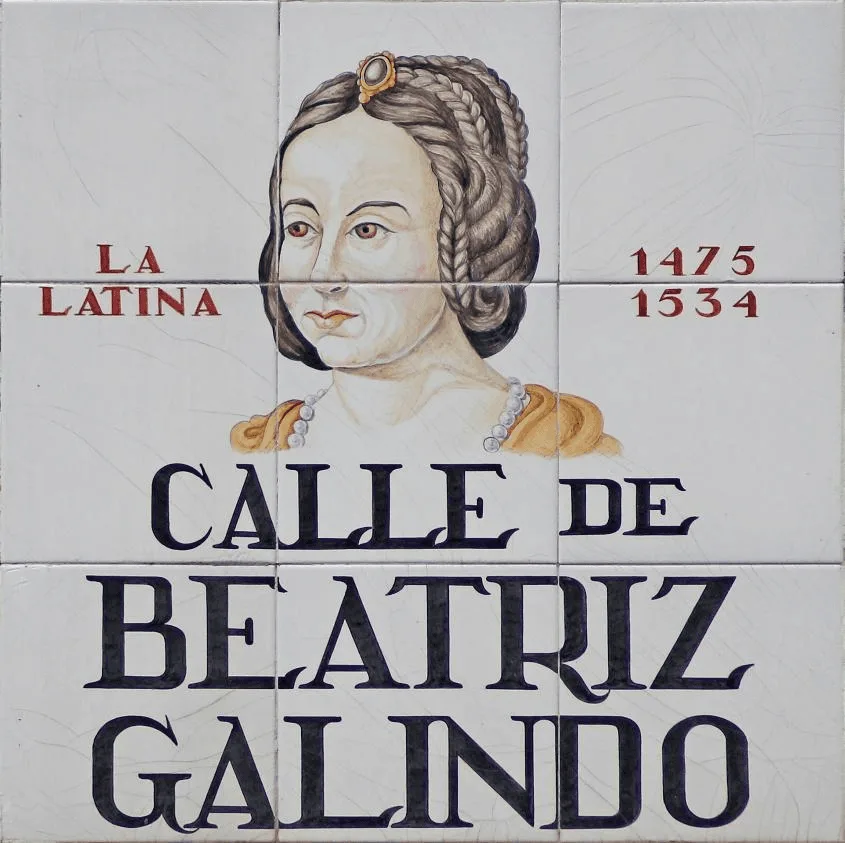
A similar case is that of María Isabel Gea Ortigas (2002), who deserves special mention because, in addition to compiling one of the most complete dictionaries on Madrid's street names, she revised and reissued Pedro de Répide's work (2007). All these works, as well as those that may have been carried out in other Spanish cities, are a precedent for more recent studies, which go beyond being mere compilations of narratives linked to the locality.
New approaches
In recent years, there has been an attempt to provide a more analytical contribution to the nomenclature of street names in various Spanish cities. The most well-known approach, due to its media impact, is related to Historical Memory. As is known, this is promoted by governmental institutions themselves, as they are legally required to change the names of all streets that bear Francoist names:
"Likewise, elements contrary to democratic memory will be considered those references made in toponyms, street names or denominations of public centers, of the military uprising and the dictatorship, its leaders, participants in the repressive system or organizations that supported the dictatorship, as well as civilian or military units collaborating with the Francoist regime and the Axis powers during World War II" (Law 20/2022).
This measure has had some controversy in its application. Notable is the case of Palma de Mallorca, which proposed changing twelve street names in 2021 due to their association with the regime. Among them were three streets dedicated to participants in the Battle of Trafalgar (1805) and another honoring a participant in the Cuban War (1895-1898). The municipal corporation argued that these did not refer to military personnel but rather to ships from Franco's fleet. Ultimately, this measure had to be suspended, and these streets retained their names (Hermoso, January 26, 2021). Similarly, in 2016 the Bilbao City Council voted against removing the name of Reyes Católicos Street, which had been renamed during the regime. In response, opposition proposed changing the names of streets dedicated to Dolores Ibárruri, Sabino Arana, and Tomás de Zumalacárregui, arguing that if names associated with participants in the Civil War were removed, it should be done for both sides (Alfonso, January 28, 2017).
These controversies arise when experts, such as historians, are not consulted before proposing these changes, as was also the case with some coats of arms of the Reyes Católicos (Fernández Guisasola and Millán Fernández, 2024). In this regard, it is worth noting Toni Morant i Ariño's (2022) publication. He shares reflections on the role of historical science in reviewing street names based on his practical experience advising various city councils from the University of Valencia. Also noteworthy are López de Maturana's (2015) publications regarding streets in the Basque Country, and Sánchez Costa's (2009), which, from a broader perspective, studies contemporary narratives behind the names of Barcelona and Madrid streets, including those related to the regime.
Also noteworthy is the importance given to women's presence in street names as an example of their recognition in history (or, often, lack thereof) (Gutiérrez Mora and Oto Peralías, 2020). Returning to Madrid, Valentina Fernández Vargas (2004) directed a work that recalled the old dictionaries by compiling biographies of most women featured in Madrid's street names up until then.
The work by Domínguez García, Ortuño Martínez and Díez Ros (2020) also stands out for including the study of women in social science subjects as well as Tomás Bagüés Pérez's (2022) publication on Zaragoza's street names.
All these works are necessarily generalist, as they must address an enormous number of streets within a limited number of pages and meet their research objectives. This prevents individual studies of each street and thus drawing specific conclusions about what each one represents.
Conclusions
The names of the streets have an importance that is often not appreciated in daily life. They are a reflection of political discourse and the cause of controversies among those in power. Therefore, it is necessary to resort to critical analysis to clarify what was truly behind street nomenclature before making changes motivated by social dogma shifts. Similarly, urban nomenclature reflects what has remained in collective memory. Thus, it is used in women's history, an area on the rise, to assess general knowledge and disseminate information about it.
Bibliography
Alfonso, José Mari. (January 28, 2017). The war of historical memory reaches Euskadi's street names. El Confidencial. https://www.elconfidencial.com/espana/pais-vasco/2017-01-28/la-guerra-de-la-memoria-historica-llega-al-callejero-de-euskadi_1323025/
Bagüés Pérez, T. (2022). Gender gap in Zaragoza's street names. Geographicalia, 74, 83-110.
Capmany y Montplalau, A. (1863). Historical and Etymological Origin of Madrid Streets. M. B. de Quirós.
Domínguez García, A., Ortuño Martínez, B., y Díez Ros, R. (2020). Women in Street Names: An Approach to Include Gender Perspective in Social Science Courses. In Roig Vila, R. (coord.), Teaching in Higher Education: New Contributions from Educational Research and Innovation, 952-961. Octaedro.
Fernández Guisasola, L. F., y Millán Fernández, D. (2024). The Reyes Católicos in Francoism: An Example of Historical Subjectivity. ArqueoTimes, 8, 54-57.
Fernández Vargas, V. (dir.). (2004). Memoir of Women in Madrid's Street Names. City Council of Madrid.
Gea Ortigas, M. I. (2002). Encyclopedic Dictionary of Madrid. La Librería.
Gutiérrez Mora, D., y Oto Peralías, D. (2020). Cities with Gender: A Study of Urban Gender Bias Through Street Names. In Chaves Martín, M. Á. (coord.), Urban Views. IX International Conference on Art and City. Universidad Complutense de Madrid.
Hermoso, Nekane D. (March 26, 2021). Palma suspends a controversial change of names for streets linked to Francoism. La Vanguardia. https://www.lavanguardia.com/local/baleares/20210326/6609223/palma-suspende-polemico-cambio-nombres-calles-vinculadas-franquismo.html
Law 20/2022, of October 19, on Democratic Memory. Official State Gazette, 252, of October 20, 2022. https://www.boe.es/eli/es/l/2022/10/19/20/con
Mesonero Romanos, R. (1861). The Old Madrid: Historical and Anecdotal Walks Through the Streets and Houses of This Town. Francisco de Paula Mellado.
Morant i Ariño, T. (2022). Commemorating Which Names, Inhabiting Which Streets? Some Reflections on the Role of Historical Science in Reviewing Urban Nomenclature from the Francoist Era, Open Past, 15, 549-559.
Peñasco de la Puente, H., y Cambronero, C. (1889). The Streets of Madrid: News, Traditions and Curiosities. Enrique Rubiños.
Répide, P. (2007). Madrid's Streets. La Librería.


.jpg)
_01.jpg)
Comments