

The article presents the facies of the Empordà and proposes various methodological studies to investigate its links with the Chassey group of Roussillon. In the first part, a selection of excavated sites in Cap de Creus is presented along with applicable methodologies for each. The second part will present several hypotheses about the influence, mobility, and exchange routes between these two groups situated on either side of the Pyrenees, based on the results of proposed methodological studies.
Context
The Middle Neolithic is a period that spans from 5000 BCE to 3000 BCE and is characterized by various factors: the exploitation of specialized raw materials such as variscite; the exchange of these raw materials with other prestige elements like melanese flint, obsidian, or alpine rock flakes; the emergence of early social hierarchies that receive these prestigious goods and the consolidation of an agrarian economic base (Terradas & Gibaja, 2002). There is a territorialization based on different socio-economic models, differences in funerary worlds, and exploited ecosystems that vary the economy of various territories (Terradas & Gibaja, 2002). This territorialization generates three identifiable facies: Vallesian, Solsonian, and Empordanese.
This work is based on the Empordanese. This group is located in the Cap de Creus area of Alt Empordà. Its origin dates back to the Montbolo group of early Middle Neolithic (3600-3400 BCE) (Tarrús, 1987). It is characterized by open-air habitats. In the funerary world of this group, we find two types of burial: The first documented group are pit graves, such as the sites of La Bassa or Fonteta (Tarrús et al., 2016). The second documented group are megalithic structures with a corridor, which originate in the Serra d'Albera, and are the oldest ones, and in Cap de Creus around 4th millennium BCE and spread to the more level areas of current Alt Empordà and Roussillon by the 3rd millennium BCE (Tarrús, 1987). These megalithic structures can be found between the plain and ~400 m above sea level, near settlements. (Tarrús, 1987).
While in Languedoc-Roussillon, we find the Chassey culture, originating around 6th millennium BCE in present-day Provence (Gassin et al., 2007), this culture quickly spread across southern France between the 5th and 4th millennia BCE as part of exchange routes that originated throughout Europe (Gassin et al., 2007). It also had a significant influence on Empordanese, where we find various typical elements of Chassey such as settlements (Tarrús et al., 2016). Among the earliest megalithic structures of Chassey documented in Roussillon are those in Serra d'Albera around the 4th millennium BCE (Tarrús, 1987). The Serra d'Albera separates Alt Empordà from Roussillon and we also find the contact between Chassey and Empordanese. These two groups are so similar that Josep Tarrús defines Empordanese in his article Ca n’Isach (Palau-savereda), a Neolithic settlement (5th-4th millennium BCE) in the dolmenic zone of Alt Empordà as “Chassey of Empordà” (Tarrús et al., 2016)
Methodology
The methodology proposed in this study proposal includes ceramic analysis, strontium isotope analysis, architectural study, and an archaeometric study to propose various results that can answer the origin of this Empordanese group.
Ceramic studies can be quite varied. The analysis of manufacture provides the method of production and thus the technology of the group that produces it (Baldellou & Ramón, 1995). Also, ceramic types can be analyzed (Baldellou & Ramón, 1995), indicating the use of ceramics and distinguishing them from others; and decoration and finishes, which mark possible functional, social, ritual, and influence implications (Baldellou & Ramón, 1995).
Strontium isotope study in human remains allows us to see the mobility of the group. From strontium analysis of bones, it will indicate the levels of strontium at the place where they were buried and strontium analysis of dental enamel will indicate various levels of strontium that the individual consumed from different foods and which remain as testimony in their teeth. They are compared and seen if the strontium is equal (the individual did not move) or if the strontium is different (the individual moved) (oral communication, Parque, 2023).
Architectural study, which allows us to see the construction of the settlements and their similarities with other groups to determine various factors: influence of one group over another, colonization of territory by an external group to the local group, acculturation of elements, exchange of ideas in trade networks...
Archaeometric study has many uses in archaeology. In this case of this work proposal, archaeometry would serve to establish a chronology and the provenance of archaeological materials.
Sites
The sites chosen for the realization of this work are recent excavations. Since they allow the maximum elements in situ to be preserved and not altered in subsequent years, allowing to obtain the maximum possible information about the Empordanese group.
The first site selected is the Dolmen dels Pardals. Discovered in 1999, several excavations were carried out in 2003, 2004 and 2006 (Carreras & Tarrús, 2016). A corridor tomb with a subcircular chamber and tumulus was documented (Carreras & Tarrús, 2016), similar to the Chassey tombs found in the Languedoc-Roussillon region (Bec Drelon, 2015). The sides of this tomb are large granite slabs and the headstone is formed by five slabs, which have been lowered and form a semicircle (Pubill & Trias, 2007). The entrance to the corridor consists of two limestone slabs forming an entry hole (Pubill & Trias, 2007). Inside this tomb, remains of three individuals were documented: two infants and one adult, along with a rich burial offering (Carreras & Tarrús, 2016). Fragments of ceramics, flint tools, and discoid pendants made of steatite were found (Carreras & Tarrús, 2016). These finds bring us to a Middle Neolithic chronology around the 4th millennium BCE; although its use continued until late Bronze Age (Carreras & Tarrús, 2016). It would be very interesting to apply ceramic studies to the collected fragments, strontium isotope studies for the remains of individuals and also architectural studies, as it would be one of the oldest in the area due to its chronology around the 4th millennium BCE.
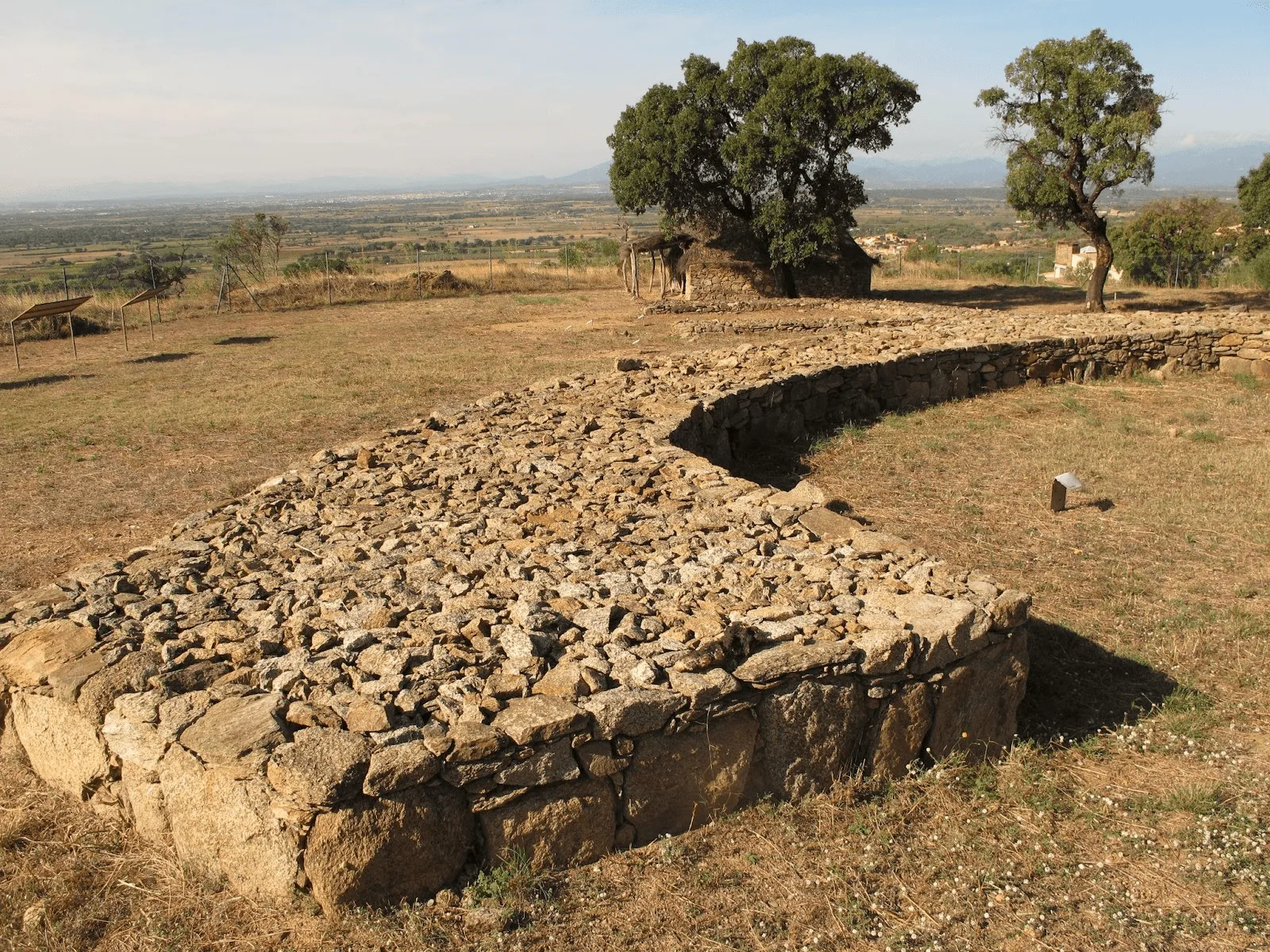
The second site selected is Llit de la Generala (fig.1). Discovered in 1912, several excavations were carried out in 1924 and 2001 (Tarrús et al., 2004). The megalithic structure is a corridor tomb with subcircular chamber and tumulus (Tarrús et al., 2004). In the 1924 excavation, carried out by Pere Bosch-Gimpera and Lluis Pericot, fragments of coarse pottery were collected (Tarrús et al., 2004). Prior to the 2001 excavation, the structure was in very poor condition (Tarrús et al., 2004). In the intervention, no bone remains were recovered, but ceramic pieces and a flint leaf were recovered (Tarrús et al., 2004). Post-excavation, this megalith was restored (Tarrús et al., 2004). In this case, ceramic studies can be applied to the pieces and also archaeometric studies, especially on the flint leaf. It would be more cautious not to apply architectural studies as it has been restored and is therefore not entirely original.

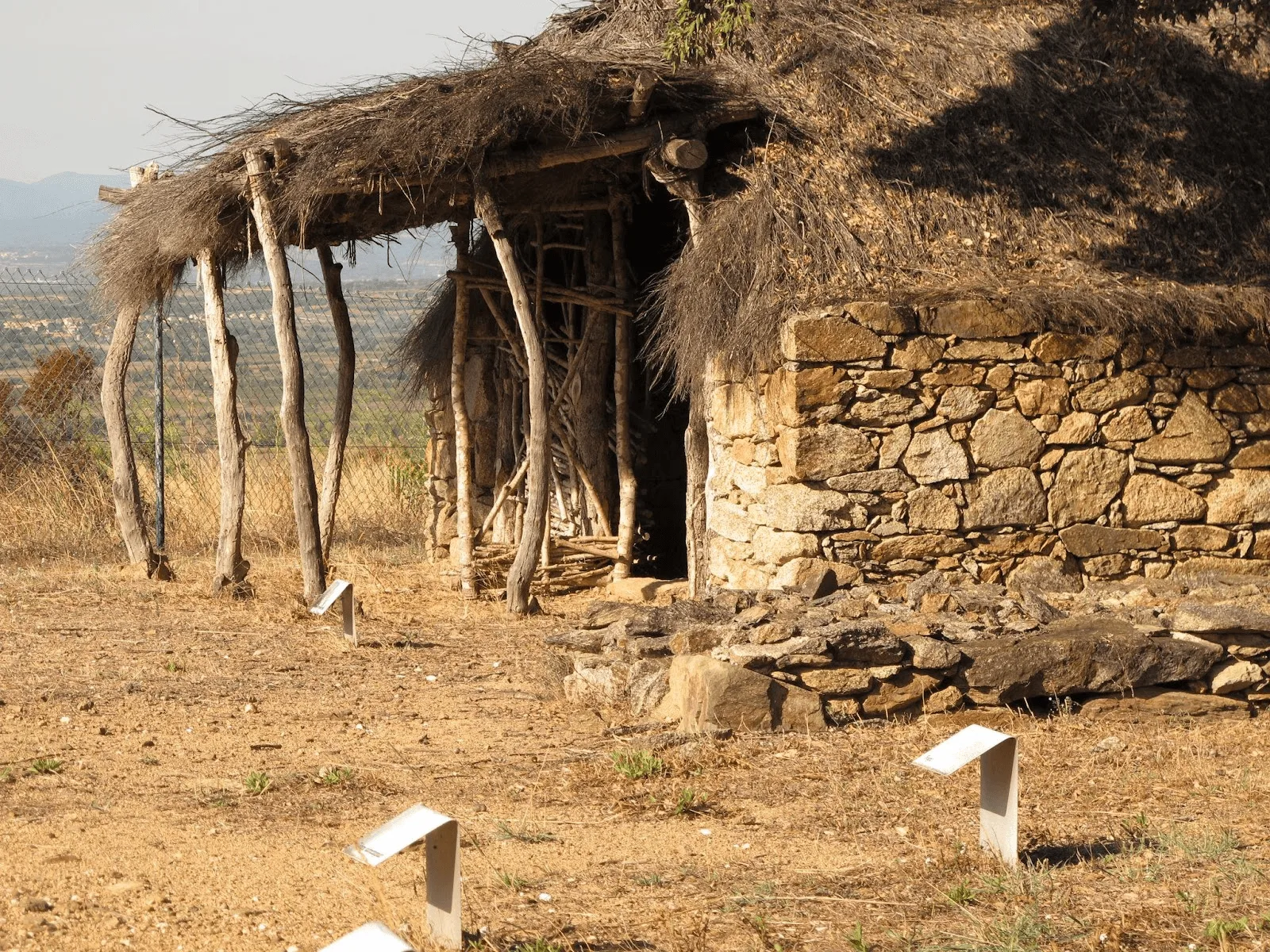
The third site selected is the settlement of Ca’n Isach (fig.2). Discovered in 1987, several excavations were carried out between 1987 and 1994 and between 2001 and 2003 (Tarrús et al., 2016). During the excavations, a settlement with various occupation phases was documented. The phases are from early Middle Neolithic around 4600 BCE to the Bronze Age in the 8th century BCE (Tarrús et al., 2016). In this article, we focus on the full Middle Neolithic period, from 3900 BCE to 3400 BCE. The settlement has four U-shaped huts documented and negative structures such as pits or post holes (Tarrús et al., 2016). As for cultural material, pottery vessels with Chassey-style decoration, flint tools, melanese flint, and polished stone tools were found (Tarrús et al., 2016). This settlement is unique because it is the only Middle Neolithic site excavated in its entirety in Catalonia and also serves as an example that Empordanese had open-air settlements (Tarrús et al., 2016). In this settlement, all methodological studies proposed in this article can be carried out except for strontium isotope analysis. Ceramic studies can be conducted on the ceramics to determine their origin; architectural studies at the huts, and archaeometric studies on the inorganic remains such as flint tools.
This article presents the Empordanese facies of the Middle Neolithic and the Chassey culture, highlighting the similarity in megalithic construction on both sides of the Pyrenees. In the article, various study methodologies are proposed to interpret the relationship between these groups: a close relationship, punctual, or if the Chassey group moved and established itself in Empordà. Three sites from Serra d'Albera-Cap de Creus (two megalithic funerary structures and a settlement) and their finds are presented along with proposed methodologies to be applied. The application of these methodologies to the findings could clarify whether the Empordanese facies is an independent group influenced by Chassey or an extension of the same group, and show the impact of Middle Neolithic exchanges in western Europe on Empordà, including possible influences from other groups such as Vallesian.
Bibliography
Baldellou, V & Ramón, N. (1995). Study of the Neolithic ceramic materials in the Olvena complex, Bolskan, 12, 105-169.
Bec Drelon, N. (2015). Megalithic building techniques in the Languedoc region of southern France. A Laporte, L & Scarre, C. (Eds.) The Megalithic Architectures of Europe (pp.31-38). Oxford: Oxbow books.
Carreras, E. & Tarrús, J. (2016). New megalithic monuments in Alt Empordà and Roussillon between 1999-2015, Cypsela, 20, 25-61.
Gassin, B. Lea, V. Astruc L. & Linton, J. (2007). Lithic Management in the Chassey Culture Neolithic. Human Evolution, 25 (1-2).
Parque, Ó. (November 24, 2023). Where do they come from? Determining mobility in human and animal skeletal remains in prehistory. Seminar of the Prehistoric Archaeology course of the Iberian Peninsula, academic year 2023-2024, University of Barcelona, Spain.
Tarrús, J.; Carreras, E.; Custoja, A. & Santamaria, P. (2004). The excavation and restoration of the dolmen del llit de la Generala (Roses, Alt Empordà), Cypsela, 15, 197-208.
Tarrús, J.; Aliaga, S.; Chinchilla, J. & Mercadal, O. (2016). Ca n’Isach (Palau-savereda), a Neolithic settlement (5th-4th millennium BCE) in the dolmenic zone of Alt Empordà. A Bonet, H. From the Neolithic to the Bronze Age in Western Mediterranean (pp. 249-256). Valencia: Diputació Provincial de València.
Tarrús, J. (1987). Megalithism of Alt Empordà (Girona): Dolmen builders between the Middle Neolithic and the Chalcolithic in Albera, Serra de Roda and Cap de Creus. Cota zero: revista d’arqueologia i ciència, 36-54.
Tarrús, J. (2021). Megalithism in Catalonia: A brief overview. Catalan Historical Review, 14, 9-20.
Terradas, X & Gibaja, J.F. (2002). Social management of melanese flint during the Middle Neolithic in northeastern Iberian Peninsula. Trabajos de prehistoria, 59 (1), 29-48.
Pubill, A., & Trias, A. (2007). Landscape appropriation through death ritual: from burial to cremation. The example of the Pardals dolmen (Darnius). Annals de l’Institut d’Estudis Empordanesos, 197-203.


Comments