

Following the outbreak of the Glorious Revolution in 1868, Isabella II was exiled to France along with all her offspring. There she would attempt to rekindle ties with the Dukes of Montpensier during the Christmas holidays of 1872, a time when the future king became smitten with his cousin Mercedes. Well-known are the numerous ballads, folk songs, or romances that permeate the love story of these two young people, which have even endured to this day thanks to the film «Where Are You Going, Alfonso XII?»(César Amadori, L. (Director). (1958). Where Are You Going, Alfonso XII? [Film]. Pecsa Films).
«Where are you going, Alfonso XII, / where are you going so sad? / I am going in search of Mercedes / for I did not see her yesterday evening».
«Where Are You Going, Alfonso XII?» (song) – YouTube
Nevertheless, the Peacemaker ascended to the throne thanks to the Bourbon Restoration led by the Alfonsine cause that was spearheaded by Cánovas del Castillo. Two marriages, it is said that the first was out of love and the second purely a matter of state force, marked his reign along with victory over the Carlist Wars, among other matters. To all this must be added that Spain begins to embrace industrial innovations characteristic of the Industrial Revolution, which is compounded by social upheavals such as the Andalusian uprising. (M. Espadas, C. Seco Serrano and F. Villacorta, 1985:23).
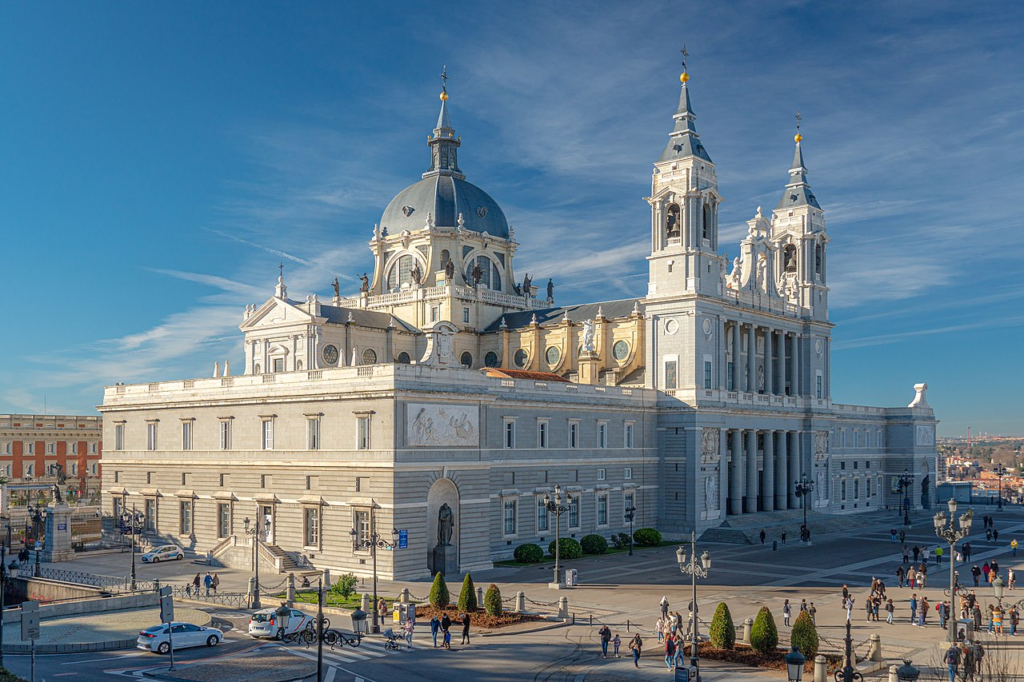
Moving on to the artistic interest that pertains to this article, the last third of the 19th century is characterized by uniting three styles: Eclecticism, Historicism and Iron. The architecture of Iron is imbued with that industrial zeal, so they are structures fundamentally engineering-based. Bridges, railway stations, markets or exhibition pavilions are created. Conversely, Historicism is characteristic of that search for national identity. In the case of Spain, the style that prevailed and to which artists felt true devotion was medieval with Romanesque and Gothic; and Andalusian fixed by that taste for Islamic art. An example of all this can be found in the Cathedral of Almudena (1826-1899), sponsored by Queen Maria Mercedes to Marqués de Cubas.
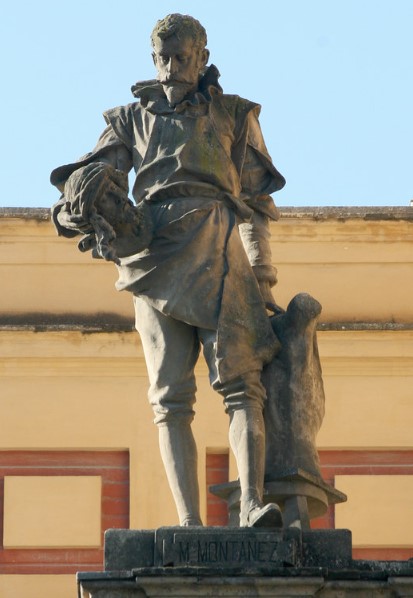
It must not be forgotten that every style has repercussions in the various artistic disciplines. Consequently, sculpture also embraced Historicism. The glorious past is recalled with characters or illustrious events carried out in public monuments such as the case of the Monument to Ramón Pignatelli in Zaragoza (Lacarra, 2013) or the balustrade of Palacio de San Telmo where the Twelve Illustrious Sevillians are represented.
Of course, in painting there is a transient dichotomy between realistic and historicist painting. The former, at first, still shows remnants of romanticism from the Isabelline period, which it will gradually abandon to strengthen itself in realism. Consequently, the latter was an academic style where there was a taste for theatricality and the veracity of past events. Authors like Eduardo Cano or José Moreno Carbonero worked on this type in the Andalusian region.
To conclude, it must not be forgotten that the artistic parameter of these two kings is a continuation of the second based on the first. With the difference that with the arrival of foreign influences from Europe, trends towards orientalism or new architectural techniques in relation to materials, represent that peculiarity of what was the reign of the «Pacificator» and the subsequent regency of his second wife, María Cristina.
Bibliography
Espadas M., Serrano Seco, C. and Villacorta, F. (1985). Alfonso XII and His Era. Historical Notes, 16. Madrid, Spain.
Lacarra, Mª. (2013) Nineteenth Century Art. Zaragoza.


Comments