


In less than a century, South Korea transformed from a war-torn country to a cultural powerhouse. This article will trace the history of this nation that learned to rebuild itself through culture.
From Dynasties' End to War
Throughout most of its history, the Korean territory —currently known as South Korea and North Korea— was ruled by a succession of dynasties that left a deep imprint on its cultural identity. The Joseon Dynasty was the last one, spanning approximately five centuries (1392-1910), during which it laid the foundations for much of modern Korean culture and social system, including the invention of the Hangul alphabet and the adoption of Confucianism as an official ideology(García Fuentes, 2021; Government of Korea, s. f.).
The Japanese occupation (1910-1945) brought this structure to an end, imposing the Japanese language, forced labor, and suppression of local traditions, although paradoxically, the country achieved a high level of industrialization under colonial rule (García Fuentes, 2021; Government of Korea, s. f.). As García Fuentes (2021) notes:
Japan's defeat in the war opened up possibilities for Korea to finally achieve independence. However, the Soviet Union and the United States decided to intervene with the aim of accelerating the withdrawal of the Japanese and subsequently unifying the territory to help Korea establish an independent government.
Everything turned out to be an illusion where these powers, in their desire to impose their own ideology, divided the territory. The Soviet Union occupied the north and the United States the south, giving rise to the two opposing states: the Democratic People's Republic of Korea in the north, under a communist dictatorship; and the Republic of Korea in the south, established as a free democracy (García Fuentes, 2021; Government of Korea, s. f.).
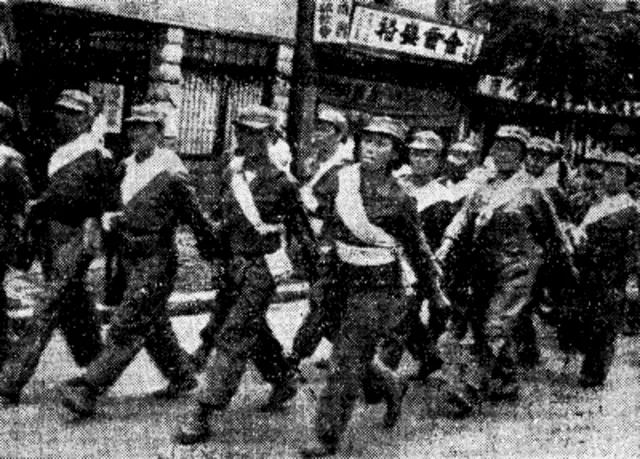
The Korean War (1950–1953) consolidated this separation, leaving the south devastated but with a profound sense of freedom and national reconstruction (García Fuentes, 2021; KOCIS, s. f.).
From Post-War to Cultural Miracle
In the following decades, South Korea underwent a rapid transformation. Under the dictatorship of General Park Chung-hee (1963–1979), the country bet on industrialization and exports, achieving notable economic growth despite authoritarianism (García Fuentes, 2021; KOCIS, s. f.).
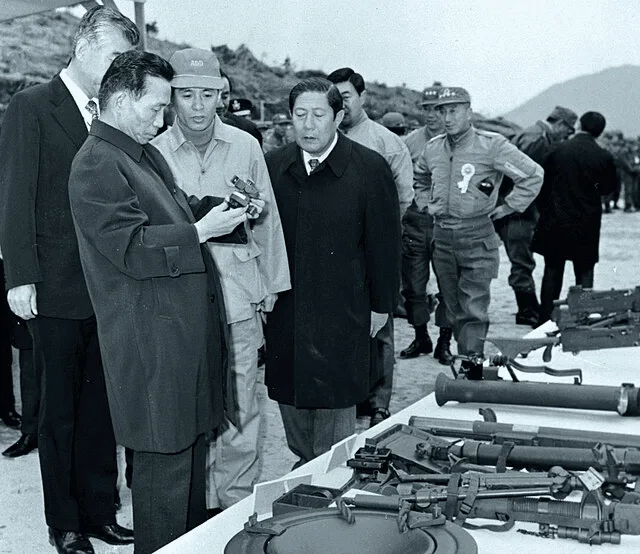
The social protests that followed, especially the Gwangju Massacre (1980), marked the path towards democracy, finally established in 1987 (Government of Korea, s. f.). As García Fuentes (2021) explains, "during the following years, the government worked to eliminate corruption and improve transparency in business operations, establish a market economy alongside democracy, and negotiate a system of reconciliation and cooperation with North Korea" (p. 8).
In 1997, the Asian financial crisis posed a new challenge. The South Korean government redirected its strategy towards technology and Creative Cultural Industries, promoting openness to foreign markets while maintaining control over public spending and inflation. These measures not only helped stabilize the economy but also reinforced South Korea's cultural adaptability to global trends and market demands, laying the groundwork for the phenomenon known as Hallyu (García Fuentes, 2021; Heo, 2015; Jin, 2016; Sakong & Koh, 2018).
Hallyu: the Korean Wave
The term Hallyu, or "Korean wave," originated in the late 1990s to refer to the growing popularity of K-pop music, as seen with artists like H.O.T. and their album Outside Castle (2000), or BoA and her album LISTEN TO MY HEART (2002); Korean dramas such as Fall in Love (2000); and South Korean cinema in China, with films like Oldboy (2000) or Memories of Murder (2000). Today, this concept has expanded to include any internationally recognized cultural manifestation from South Korea (Kim and Ryoo, 2007; Dixon, 2011; Lee, 2011; Kang, 2016; García Fuentes, 2021).
This phenomenon fits into the contemporary history of South Korea as a consequence of the new direction taken by the South Korean government in its foreign policy —to become a cultural reference in Asia— after a long period of recession (Garcia Fuentes, 2021; Andrade Bastidas, 2019).
As Andrade Bastidas (2019) points out, the unexpected success of this new approach led to the government recognizing its importance and establishing the Korea Creative Content Agency (KOCCA), South Korea's leading governmental agency overseeing the advancement of creative content from South Korea both nationally and internationally.
Joseph Nye (2008) defines this strategy with the term soft power, as the ability to attract and convince others through culture and values, in contrast to hard power, based on force or coercion.

In South Korea, mass culture —music, television, film and entertainment— has been the main axis of Hallyu, promoting South Korean values and traditions while reinforcing sectors such as tourism, education, fashion, and gastronomy (Mejía, 2018, p. 3; Forero-Triana et al., 2020).
Conclusions
In contemporary Korean culture lies the memory of a country that has known how to reinvent itself. Each K-pop dance routine or song, each award-winning film or viral series is, in some way, the fruit of a nation that turned adversity into impulse and culture into its engine for social and economic cohesion.
Although Hallyu does not explain all the complexity of contemporary South Korean history, it symbolizes the country's ability to transform crisis into opportunity. In just a few decades, South Korea went from devastation to becoming a global cultural reference, demonstrating that progress can also be written through art, creativity, and shared memory.
Bibliography
Andrade Bastidas, G. A. (2019). Ola Hallyu: la innovación en el soft power de Corea del Sur. [Doctoral thesis, Universidad Militar Nueva Granada]. Repositorio institucional de la Universidad Militar de Nueva Granada. https://repository.umng.edu.co/bitstream/handle/10654/36473/AndradeBastidasGiselleAlexandra2019.pdf?sequence=1
Dixon, T. (August 17, 2011). The Journey of Cultural Globalization in Korean Pop Music. E-International Relations. https://www.e-ir.info/2011/08/17/the-journey-of-cultural-globalization-in-korean-pop-music/
Forero-Triana, L. A., Monroy-Bedoya, J. N., & Ramos-Rivas, C. (2020). The strategies of the Creative Cultural Industries in South Korea compared with Colombia's cultural industries [Undergraduate thesis, Universidad Agustiniana]. Repositorio institucional de la Universidad Agustiniana. http://repositorio.uniagustiniana.edu.co/handle/123456789/1548
García Fuentes, I. (2021). The K-pop industry and its influence on advertising. [Bachelor's thesis, University of Seville], Repositorio institucional de la Universidad de Sevilla https://idus.us.es/items/ab14ae36-6619-45d9-a7fc-c172c1dfd2a5
Government of Korea. (s. f.). About Korea: History. https://spanish.korea.net/AboutKorea/History
Heo, I. (2015). Neoliberal developmentalism in South Korea: Evidence from the green growth policymaking process. Asia Pacific Viewpoint, 56(3), 351-364. https://doi.org/10.1111/apv.12093
Jin, D. Y. (2016). New Korean Wave: Transnational popular culture in the age of social media. University of Illinois Press.
Kang, W. (2016). The KPOP Dictionary (Spanish): 500 Essential Words and Phrases for KPOP, Dramas, and Movies. New Ampersand Publishing.
Kim and Ryoo, J. (2007). South Korean Culture Goes Global: K‐Pop and the Korean. Korean Social Science Journal, 34(1), 117-152. https://doi.org/10.36033/KSSJ.34.1.200706.117
Lee, S. J. (2011). The Korean Wave: The Seoul of Asia. The Elon Journal of Undergraduate Research in Communications, 2(1), 85-93. https://www.elon.edu/u/academics/communications/journal/archive/spring-2011-issue/
Mejía, L. C. (2018). BTS K-pop, an exponent of Hallyu, Soft Power and Transmedia Communication. Anuario de Investigación de la Comunicación CONEICC, 1(25), 82-94. https://doi.org/10.38056/2018aiccXXV46
Nye, J. S. (2008). Public Diplomacy and Soft Power. The Annals of the American Academy of Political and Social Science, 616(1), 94-109. https://doi.org/10.1177/0002716207311699
Sakong, I., & Koh, Y. (Eds.) (2018). The Korean Economy: Six Decades of Growth and Development. United Nations. https://digitallibrary.un.org/record/743188?


.jpg)
Comments